Friday, 29 November 2019

Get together this winter to tackle loneliness!


Although loneliness can affect anyone at any time, the winter months can bring specific challenges. Christmas can be a reminder of loved ones who have passed away and, for those with reduced mobility, poor weather conditions can make it difficult to visit friends and family.

Small acts of kindness, such as visiting a neighbour, can make a big difference to others, which is why we’ve been supporting the Great Get Together since the launch of our Link Together campaign to alleviate loneliness in 2017.

This guest blog has been written by Eleanor Harrison, Partnerships and External Affairs Manager at the Jo Cox Foundation, about this year’s Winter Great Get Together and how WI members can get involved.


Following the incredible success of this summer’s Great Get Together, it’s time to bring our communities together again this winter to tackle loneliness.

Loneliness is an issue that was close to Jo Cox’s heart, expressed in her memorable words: “I will not live in a country where thousands of people are living lonely lives forgotten by the rest of us.” Jo recognised that loneliness is an issue that doesn’t discriminate. It can affect anyone, from the elderly and those with health and mobility issues to new mums, refugees and the recently bereaved. The scale of the issue is huge, with a landmark report from the British Red Cross in 2016 finding that over 9 million people are affected by loneliness in the UK.

At The Jo Cox Foundation, we are committed to continuing Jo’s legacy and building stronger communities where everyone has a sense of belonging. We are so grateful to all of the WI members who participated in the Great Get Together this summer to help make this vision a reality. You were part of an amazing movement of 720,000 people who took part in over 11,000 events over the June weekend!

Our CEO, Catherine Anderson, would like to express her thanks: “The WI has long been at the heart of so many communities, and we are so grateful to have your support. The year on year commitment of WI members to Jo’s legacy and values of kindness and compassion is an inspiration to all of us at the Foundation and our wider community of organisers. We can’t wait to see how you’ll get involved in the Great Get Together again this winter!”


We would love you to take part in the Great Get Together again this December and help to tackle loneliness in your community. There are so many ways to get involved, from hosting a festive feast for elderly people in your area, to rallying a group of carol singers to visit those who are unable to leave their homes, to simply knocking on a neighbour’s door with a mince pie. Whatever you decide to do, you can be sure to make a real difference in the life of someone who might be feeling lonely this winter.

To find more inspiration, ideas and resources, visit our website.

We’d love to hear your stories of how you Get Together this winter! Don’t forget to tag us on social media at @great_together and if you have any questions, feel free to get in touch with our team by contacting info@jocoxfoundation.org.

Have a Great Get Together this Winter!


Tuesday, 2 July 2019

Nutfield Gals WI continues work with Reigate and Banstead Women's Aid


Guest blog written by Jan Cornwell, Nutfield Gals WI Secretary

It’s been a busy couple of months for Nutfield Gals WI, we held our May fundraiser for the women’s refuge. We also invited Emma, the Refuge Manager and Play Therapist to join us for our meeting and update us on what’s been happening over the last year. May brought some amazing news for Reigate and Banstead Women’s Aid (RBWA) and all other women’s refuges around the country, but more of that later!

There was as always a good attendance for our fundraiser evening, we had a raffle with some great prizes, we sold cakes (my goodness our girls can bake!), Ruth sold young plants and her homemade jams and pickles, yum! Angie, another of our members makes jewellery and donated her sales, Barbara sold handmade cards and we had a bring and buy stall. In all we raised a magnificent £650 on the night with more money coming in from those that were unable to attend, so proud of our girls their generosity and kindness is heart-warming!

Emma gave us her update and had some shocking statistics to tell us with regards to suicide and murders of women suffering domestic abuse. Three women a week take their own lives and two women a week are murdered by the perpetrator, utterly horrifying!  She also told us they’ve been forced to reduce the hours of one the women’s advocates due to funding issues, it’s a constant and unrelenting battle to find more funding from other sources to top up their budget and pay for all of the vital services they offer the women and their children. Counselling for the women, play therapy for the children, the massive cost involved in running the house, paying their rent, maintenance and replacing furniture etc, this takes a huge chunk of their budget each and every year!

The refuge employs two women’s advocates who help the women through any police, legal, medical, financial and housing issues they may encounter after escaping the perpetrator; they also oversee any counselling the woman may need. There are two play therapists who work with the children who can often be affected mentally and emotionally as a result of the abuse they’ve witnessed or experienced. They have a CEO who oversees everything and has done television and radio interviews to help raise awareness of the work RBWA do. 

Emma, the full time play therapist is also the Services Manager and is involved with seeking additional funding. Very few, if any other refuges offer this level of care and support, RBWA is exceptional in this regard but have a very strong and proven belief that this is the level of care that’s needed and that brings about successful and long-lasting results. On top of this there is an accounts person who also deals with donations, a person who looks after basic maintenance of the rooms and common areas of the house and additionally a number of volunteers. Everyone at the very least doubles up on their actual job and deals with anything that might need dealing with. The roll up your sleeves and get on with it mentality is alive and well here and in spite of what you might think, it’s a joyful and happy place!

Some great news has been announced that could change the future of refuges and give them at least some of the financial security they so badly need.

The government has set out proposals to place a new legal duty on local authorities to provide support in ‘secure accommodation’ for survivors of domestic abuse and their children, creating a new statutory system for the funding of refuges and other services within the community. 

This is fabulous news and provided everything goes ahead and the money local authorities provide is a reasonable and sensible amount, it will help to make life a little more secure for women and their children who are fleeing domestic abuse, it's not the whole answer but it's a good start!

Further information on these proposals can be found here.

Thursday, 30 May 2019

WI members in Wales take action to preserve, protect and plant urban trees


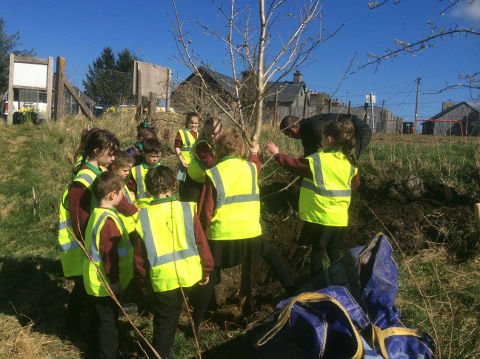
Since September 2017, NFWI-Wales has been engaging members in taking action to address the decline in urban trees. Currently 200 WIs throughout Wales are involved in activities such as surveying, observing, protecting and planting trees and are spreading the word about the value of trees to the wider public.
Llansaint WI planting trees
Urban trees are among the most versatile natural assets that can be used to effectively raise the quality of Welsh towns and cities. Research shows us that trees in Wales’ towns and cities deliver many social benefits as well as mitigating the effects of climate change. Urban trees make a key contribution to our health and wellbeing by reducing air pollution and creating green spaces as well as reducing the risk of flooding, capturing and storing carbon from the atmosphere and helping to mitigate excessive warming. 
Yet urban trees are under continuous threat from factors such as pests and diseases, an ageing tree population, climate change, the demand for new building development and a lack of understanding on the benefits that trees bring to society. Most recent studies show that 73% of urban areas in Wales have lost trees since 2010 and 7,000 trees were lost between 2006 and 2013.

Birds crafted by Sir Gâr/Carmarthenshire Federation members
The WI has a proud and rich history of standing up for the natural environment which has been a key theme for many WI campaigns and projects, with members dedicated to protecting and promoting the countryside, limiting their own environmental footprints and taking action on climate change.
Through this project, WI members have been using their passion for improving the environment to conserve trees for future generations. Many WIs have been involved in local tree planting. Some have been holding woodland walks to identify, measure and survey trees whilst others have been in contact with their local authority about tree issues in their local community. Members have also been inspired to create craft items to promote the value of trees.
Below are some project highlights:
Over 1000 trees have been planted by members from Sir Gâr/Carmarthenshire Federation.  The Federation has held two competitions where members crafted birds and animals. WIs all over the county have engaged in guided walks to identify, measure and survey trees.
Members from WIs in Gwent have been surveying trees in the grounds of Caldicot Castle. 

Powys Radnor Federation blanket
Using the OPAL Tree surveys they have been measuring the height, girth and general condition of the trees. Members have also surveyed trees at Cwmbran Boating Lake. The group will revisit the lake during the summer to record visual changes and wildlife on or near the trees.
In Powys Radnor Federation, members have been surveying and yarn bombing trees in their local community. Some have written to their local authority in relation to tree issues whilst others have been involved in creating a blanket to promote trees.
Ysbyty Ifan WI in Clwyd Denbigh Federation has been involved planting trees in the community in partnership with the National Trust and a local school.


WIs with an interest in getting involved can find out more here. 

To find out about the federation activities taking place across Wales, please visit our website.

Tuesday, 7 May 2019

NFWI-Wales Recruitment Award winners share the secrets of their success


To inspire WIs to increase their membership, NFWI-Wales runs an annual Recruitment Award competition. The competition comprises of 2 categories namely ‘WIs with fewer than 25 members’ and ‘WIs with 25 members and over’. The winners are announced each year at the Wales Conference and presented with a certificate and bursary to attend a course at Denman. 

Skewen WI is presented with its award  
Last month Skewen WI, Glamorgan Federation was announced the 2018 Recruitment Award winner of the category for WIs with fewer than 25 members. The WI had increased its membership from 24 to 46 members, an increase of 92%.

The winner of the category for WIs with 25 members and over was announced as Portskewett & Sudbrook WI, Gwent Federation. During 2018, the WI succeeded in increasing its membership from 32 to 52 members, an increase of 62.5%.


Eleanor Griffiths, a member of Skewen WI shares the secrets of the WI’s success in recruiting new members:

Skewen WI were so surprised and delighted to receive the recruitment award for 2018 and of course the bursary award for Denman.

Our journey started in 2013 when Skewen WI was formed with a membership of 23 ladies, but fell to 17 within two years or so. Five years on we have a membership of 70 and it appears to be rising!

So the big question is how?

Well the bottom line or cynical answer could be money!
Yes, we have been awarded two lottery grants, but it’s no use having a lot of money if it’s not used wisely and effectively.

We are committed and we have a passion for creating a WI that is fun, informative, educational, interesting and above all sociable. 

A recent edition of WI Life contained an article on the benefits of being a committee member.  It describes the three officer roles of President, Treasurer and Secretary as the Holy Trinity. Well - we are not like that!

We are a large and dynamic committee, who have good ideas, energy and the ability to make things happen. There is no better committee meeting when ideas thrown into the pot are creative, fun and sometimes daring! 

Our main duty is to provide an interesting programme of monthly meetings and we have used questionnaires to seek members’ views on the kind of speakers and events they would like to happen.

This is just a small part of Skewen WI. We run an array of clubs and workshops, as we want to appeal to a range of members. These include a monthly Craft Club where quality work is produced. Our monthly Book Club encourages vigorous debate and extends our love of reading. The IT Club has amazed and excited us, because, at last we learned to use our mobile phones and tablets properly!

In addition we love workshops, from willow weaving, painting, pottery and wreath making. 


Skewen WI crafts
We currently have weekly Walking Netball, we will be learning to sing as a choir in the summer and have a series of Samba Drumming workshop booked for the autumn. 

We travel together on monthly visits, to places such as Denman College, Stratford Upon Avon, Oxford, historic houses near and far and places closer to home such as Penderyn Distillery, Llanelli House and the Gwili Railway, to name but a few.

We never let a good opportunity pass us by, such as the Glamorgan Show. We have entered many classes and achieved gratifying results both as a small and medium WI - in this year’s show we will be classed as a large WI.

Above all we strongly believe that clear lines of communication are essential. All members receive frequent texts and emails, to remind them of meetings, events, or any other useful information. Boy-oh-boy our IT Club has paid dividends in that area!

So it’s not just about having the money to spend on the things mentioned so far- it’s about the leadership of the committee. In other words a committee that constantly looks for ways and means to bring together a community of women to learn share and laugh together. 

We firmly believe that leadership is not about title or designation. It’s all about Impact, Influence and Inspiration:

Impact involves getting results like a healthy membership;
Influence is about spreading the passion you have for achieving a dynamic WI; and
Inspiration is the ability to make people want to be part of our very special organisation. 

Portskewett & Sudbrook WI is presented with its award 
Val Robinson shares the success of Portskewett & Sudbrook WI in increasing its membership:

The WI saw a large increase in our membership over the course of the year. The January 2018 meeting was an adult ballet lesson. One of the members invited others from the class in Chepstow to attend that meeting, so that the teacher had some ladies there who knew a little about ballet and could confidently do some of the positions. Many of the visitors that evening went on to become members of Portskewett & Sudbrook WI.

There were several new ladies who attended our “Dough at Home” evening, having seen posters advertising the meeting in the village, with a local baker, who teaches people to make artisan breads in their own homes. They not only sampled the
bread at that meeting but, having sampled the WI, became members.

Members brought friends along and others came and joined, having heard how interesting, friendly and fun the WI is.

Broadcast your WI proudly, invite any ladies you meet in exercise classes, choirs, at the school gate, on the local bus, to come and try your varied programme for themselves.


Thursday, 4 April 2019

Norfolk Federation celebrates 100 years


Guest blog written by Margaret Collingwood, Norfolk Federation Chairman

We're still in a daze from our hundredth Annual Meeting. We filled the Norwich Theatre Royal, with over a thousand WI members. It was an unforgettable occasion. We combined serious business with serious fun.

What did this remind us about the WI and what it is all about? The WI has three key messages.

First message: The WI is here to inspire you.
So, how is the WI inspiring? Our meeting gave one answer - every one of us felt inspired. By the mass singing of Jerusalem (of course!); by the poems, stories and jokes from the incomparable Pam Ayres; by the theatrical atmosphere and feeling of occasion; by the sense of purpose and fellowship; and not least by the important business of the day: work of all those committees, the resolutions considered, the reports of our latest achievements.


Those achievements are nothing new. Already in 1919 the WI was working to take teachers out into the villages and bring education to the women. Women wanted to do more for themselves. The new Women's Institutes were there to help: teaching about food production and preservation, about keeping children healthy and safe, by better nutrition and by hygiene in the home. Soon there were lessons on glove making and toy making, on upholstery and tinkering - the list is fascinating.

Today's WI has the same message, though the activities have subtly changed. Just one example: we now have a Digital Team, running workshops to get WI members comfortable with today’s technology and at home with their laptop, pad and smart phone. We still want to inspire you!

Get Comfortable Online - January 2019
Second message: The WI is everything you want it to be.
What do women want from their WI today? Is it so very different from what they wanted in 1919?

Women of all ages and backgrounds need somewhere they can be themselves. Many members join the WI simply to make friends. Maybe the children have started school, or they've moved to a new area, or they've retired and need something to do. The WI is the place where women can find others with shared interests and, at the same time, learn more about themselves.

Throughout these hundred years our members have been given the chance to shine. There's been a continuous WI presence at the Royal Norfolk Show, often with pageants, processions, exhibitions and sales of crafts and produce. Members have joined a choir or theatre group, taken a watercolour course, or discovered the science behind a cream tea. There are book clubs, rambling groups, lunch clubs, cinema clubs. New interests spring up while old ones fade away. Poetry reciting competitions, folk dancing sessions were popular in the 1930s but alas don’t have the same following in 2019.

Keep Fit Medau Rally 1963
Third message: The WI is what you make of it.
What can you make of the WI? That’s completely up to you. Once a month, a couple of hours spent with friends, listening to an interesting speaker and sharing a cup of tea and a piece of cake ... for many members that's all they ask. But the WI can be so much more. We have Denman College, our own residential education centre, with courses on cookery, crafts, lifestyle, history, literature... anything the members show interest in. The WI has a proud history of campaigning. Our resolution process gives every member a chance to express her views and to be heard. We try to change things for the better and to tackle issues that matter to each of us.

All members are encouraged to help run their own WI. Every WI needs its committee, as well practical help such as meeting and greeting and of course making the tea. Our Federation office is always looking for volunteers to work in our committees or help with all those tasks that keep the WI engine running. Truly, the WI is what its members make of it.

Tuesday, 26 March 2019

Reigate and Banstead Womens Aid: A women’s refuge for women and their children fleeing domestic control, abuse and violence


Guest blog written by Jan Cornwell, Secretary of Nutfield Gals WI

This blog is about the beginning of mine and Nutfield Gals WI’s involvement with Reigate and Banstead Women’s Aid (RBWA), the amazing women who run the Women’s Refuge and the women and children who find themselves needing this massively underfunded and at risk resource.

By pure chance in late 2017 I became involved with my local Women’s Refuge firstly by just donating mine, my sister and daughter’s unwanted clothes and kid’s clothes and then quite soon afterwards as a volunteer.

In 2018 I spoke to my fellow committee members to see if we could invite Emma who manages the refuge to come and speak about what the refuge does at one of our meetings, they liked the idea.  Thankfully she agreed to come and talk about, the challenges involved and also spoke generally about the kinds of cases they have to deal with.  She also for the very first time in public, agreed to tell her own personal story of escaping an abusive and dangerous relationship. 

To say the story she told of her own experience was powerful, shocking, heart breaking and utterly appalling is a massive understatement, the emotion and empathy in the room was tangible, we were stunned into silence by what this 29 year-old woman had endured and survived. She was and continues to be, an inspiration to me. 

The financial challenges of running the refuge are constant and unrelenting, the CEO and staff spend far too much of their precious time trying to find ways of saving money and securing funding. The Nutfield Gals decided they wanted to help, so we do!

We regularly make donations of female toiletries and baby/toddler items such as nappies and wipes. We also make donations of non-perishable foodstuffs. The refuge provide a welcome box for all new clients which contains toiletries and some starter foodstuffs - pasta, rice, tinned tomatoes, beans etc., which helps the women have a measure of independence to feed their family until such time as they have money to shop for themselves. They also have new bedding and towels in their room and if they have children, a toy and book, however, all of this has to be donated or funds raised to finance it.

All these things are desperately needed by the women and their children, as they usually arrive at the refuge with nothing, just the clothes they stand up in. Can you imagine being so afraid for your life that you have to leave your home, your friends and family, your belongings, your children’s toys and clothes and flee hundreds of miles away from everything that’s familiar in order to be safe, not a comfortable thought is it?

I’m going to be blogging regularly about mine and Nutfield Gals experiences of being involved with such an incredibly worthwhile and vital resource. I hope you find it interesting and informative and that it stirs something in you to make you and your WI want to get involved with your local women’s refuge. I really hope so, because this hideous abuse and control is going on everywhere, in your town, your village, your street, maybe in your WI or worse still, in your own family! 

Did you know your WI can support your local women's refuge under the NFWI's violence against women mandate? 

Thursday, 6 December 2018

#AskHerToStand: Report on 50:50 Parliament event


Bucks Federation member Deb Sanders was fortunate enough to receive an invitation from her MP to attend the 21st November 2018 #AskHerToStand event organised with the Fawcett Society, 50:50 Parliament in partnership with the Jo Cox Foundation, and the Centenary Action Group. The reception, exhibition and panel discussion was to mark the centenary of the Parliament (Qualification of Women) Act 1918 when women were first able to stand for Parliament.

Photo credit: Deb Sanders
Here she recounts her experiences during her day at Westminster.

It’s amazing where your WI membership can lead you! I’d never have thought I’d be going to a conference aiming for 50/50 gender representation in Parliament. After asking my MP, Dominic Grieve, for a formal invitation, within 48hrs I had an appointment to have coffee with him in Portcullis House, Westminster, even though I was a non-political delegate.

As I only found out about the opportunity to go on the event late in the day I missed applying for tickets for Prime Minister’s Question Time and the Women’s Equality Select committee but nonetheless my day was really interesting. I did make a complaint, as I had climbed up the two flights of stairs to register at the start of the day, and there was no provision for people with mobility issues.

In the exhibition all the political parties had a stand including the Women’s Equality Party.  The Fawcett Society was advertising itself as “the largest women’s campaigning organisation in the UK” so I reminded them of the nearly quarter million WI members nationwide!

The next port of call was Portcullis House by Westminster station. 213 MPs have their offices in this impressive building so security is key. Once inside I waited in a communal area to be allowed in by my MP. We passed Laura Kuenssberg from the BBC holding a media interview. The meeting with Dominic Grieve was around thirty minutes – definitely not long enough to discuss either local or national politics but it was a good opportunity to ‘flag wave’ for the WI. We had an interesting discussion about the intense workload of MPs and how this can be so disruptive to family life.

Mr Grieve then escorted me through the tunnel that links Portcullis House to the Palace of Westminster and into Westminster Hall. What an impressive building, you could feel the years of history around you.  A full size Lego model of Emily Pankhurst is currently on display (see photo). After thirty minutes to take in the splendour of this building, all participants gathered for a group photo with many female MPs including Harriet Harman, Penny Mordaunt and Amber Rudd.

Then back to Portcullis House and the dreaded security checks. This took so long that I missed a buffet lunch!  However I made it in time for the keynote conference: ‘Ask Her to Stand’.  The Rt.Hon Harriet Harman QC MP, Mother of the House, was the keynote speaker.  Other women MP speakers included Vicky Ford, MP - Chair of the APPG on Women in Parliament, Layla Moran, Rosena Allin-Khan, Mhairi Black, Penny Mordaunt, Maria Miller and Helen Whately.  The Q&A session was much more positive and friendly than BBC Question Time.

All spoke passionately about the rewards of being in Parliament and having the opportunity to make a difference. Despite the pressures and long hours, the job is rewarding was the unanimous thread.  There are a few disadvantages: Penny Mordaunt had to turn down an evening with Hugh Grant so that a committee of which she was a member was quorate! Other threads were that women take years to make the decision to stand for Parliament and often lack the confidence to do so but that the collaborative nature of working together in Parliament was rewarding, and women seem to be more compassionate. ‘Women network together to communicate, men work together to gain information and power’ was another statement. ‘The dynamics of Westminster, and all other levels of local government change when there is a fairer representation of women’ was another thought. This was a powerful and uplifting session which left me with much to think about.

The final part of the day was a seminar event back in Church House where we’d registered.  Delegates were looking at the problems of ‘hard to reach’ women in the community. It was suggested that the term used should be ‘Easy to Ignore Women’. I sat at a table with a group of women from a variety of backgrounds which included councillors from a very deprived area of the country. We all faced similar problems but I was impressed with the energy and compassion of these councillors who really understood their area and were so committed to action. Discussions ranged around measures that government can take and practical local solutions for these women with no ‘voice’. We all agreed that austerity has made social isolation a bigger issue and especially in adult education.

This was a fascinating day and I returned home with more questions than answers. Why was I there as a WI representative and what can we do to improve 50/50 representation at all levels of public life? The political parties are making great efforts to train and support women who wish to stand for election. This, however, creates a body of women who owe their allegiance to a party and less to a community.

I joined the WI thirty years ago. With the mentoring and friendship I received from local members I have chaired a number of committees, been a school governor, been a town councillor, and gained a Diploma in Stitched Textiles. The founding members of the WI were not afraid to campaign in public. The WI is in a unique position to encourage and train women to get involved in all levels of public life without the mantra of party politics. Are we doing enough? Have we got a little fluffy at the edges and concentrate too much on the craft and baking skills? It’s really hard to get local members inspired to campaign for our resolutions, should we be doing more to boost the confidence of members to speak in public and thus have the tools to be able to campaign?

It is time we had equal representation in all levels of local and national government but this requires giving women confidence and the tools to do the job. What can we as WI members do to facilitate this?

Further reading:

Thursday, 29 November 2018

Say ‘Not in my Name’ to Violence Against Women

Written by Sarah Thomas, Public Affairs Officer at NFWI-Wales


The National Federation of Women’s Institutes (NFWI)-Wales is calling on WI members to recruit male ambassadors to make a stand against Violence Against Women (VAW). The 16 Days of Activism against Gender-based Violence started on 25 November (International Day for the Elimination of VAW and White Ribbon Day) and ends of 10 December (Human Rights Day).

Last Tuesday (20 November), we held a Candlelight Vigil, sponsored by Joyce Watson AM, outside the Senedd to show solidarity with victims of VAW across the world and send out a powerful message that VAW is unacceptable and will not be tolerated.

Candlelight Vigil outside the Senedd
Since 2012, NFWI-Wales has engaged WI members in the Not in my Name Campaign which was established in 2012 with Joyce Watson AM, Assembly Member for Mid and West Wales.The campaign has seen WI members use their strong community links to recruit male ambassadors from their communities in speaking out against VAW and making a pledge to never commit, condone or remain silent about VAW. During the 7 years of the campaign, we have seen groups across Wales, including male choirs, farming unions and sports clubs making a pledge to never commit, condone or remain silent about VAW. Campaign supporters have included Christian Malcolm, the WRU, Glamorgan Cricket, Cricket Wales, Newport County Football Club, Wrexham Football Club, Only Men Aloud, Cardiff Blues and the Cardiff Devils.

The prevalence of VAW is shocking and unacceptable.  It is estimated that, every year, around three million women across the UK experience VAW, which includes domestic violence but also rape, forced marriage, sexual exploitation and other forms of abuse and harassment. Over the last year, reports of sexual harassment and abuse have been endemic as we have seen women mobilised to speak up about their experiences through the #MeToo and #TimesUp movements.

Whilst women are disproportionately the victims of violence, we should not underestimate the role of men in the prevention and elimination of VAW. We must inspire more men to speak up publicly to challenge the attitudes, behaviours and gender inequalities that contribute to this violation of women’s rights. Men can be agents of change and play a crucial part as positive role models to help us achieve a culture change where VAW is not tolerated by society.

South Wales Fire and Rescue pledging support for the White Ribbon Campaign
It is encouraging to note that more and more public bodies are achieving the White Ribbon UK accreditation status in recognition of their commitment in involving men in speaking out and challenging male violence against women and girls. In October this year, Carmarthenshire County Council, Mid and West Wales Fire and Rescue Service, and Dyfed Powys Police were awarded White Ribbon accreditation. We should also celebrate the fact that South Wales Fire and Rescue Service was the first fire and rescue service in the UK and the world to achieve the White Ribbon status in 2014.

Whilst it is positive to note the commitment being shown to ending VAW, we know that the pace of progress has been slow and much further action, and at a faster pace, is needed if we are to achieve a society where women are treated equally to men and consequently a society where women are free from the fear of violence and abuse. This was reinforced last month when the WI marked 100 years of campaigning and reflected the progress made over the last 100 years through WI campaigns as well as what still needs to change. It was interesting to look back at the early campaigns which from the beginning focussed on achieving equal rights for women and in addressing what was referred to as ‘the unequal moral standard’ or what we would call today ‘the double standard’. Domestic violence was a key concern for WI members in the 1970s and 1980s and saw the WI campaigning for marital rape to be recognised under the law; for funding of refuges for survivors of domestic violence and their children in every county; to increase the severity of rape sentences, to adequately define domestic violence under the law so that women and children in the home were protected, and to make sure that survivors of domestic violence were able to access justice through the courts.

Revisiting these resolutions has brought home how relevant some of these resolutions are today as we continue to campaign for gender equality and the provision of sustainable specialist support services that women, wherever they live, can access. 

Gender inequality is a cause and consequence of VAW and we all have a part to play in challenging attitudes and behaviours that persist in our society - be it in the home, community, workplace or school. In Wales, we are fortunate to have the ground-breaking Violence Against Women, Domestic Abuse and Sexual Violence Act in place which focuses on protecting and supporting victims. We must now ensure that the Government delivers on its commitments and that the implementation of the Act does truly make a difference to women’s lives.

Wednesday, 21 November 2018

Margaret Wintringham: ‘Our Institute MP’


2018 has been an important year for celebrating women’s suffrage and rights. In February we celebrated the centenary of the Representation of the People Act 1918, which gave women over 30 with a property qualification the right to vote for the first time. Many of the earliest members of the WI including Lady Denman and Grace Hadow were involved in the suffrage movement and we are proud to recognise their contribution.

Today we mark another milestone as it is 100 years since the Parliament (Qualification of Women) Act passed, enabling women to stand for Parliament for the first time. While the WI is non-party political, this anniversary is also special to the organisation.

Margaret Wintringham 1930
Margaret Wintringham was the second female MP to take her seat in the House of Commons and a very active WI member. Margaret was supported by the NFWI in her career and was known as ‘our Institute MP’ by other WI members.

Margaret’s role in Parliament was celebrated in Home & Country, the WI’s membership magazine, which reported:

‘The election of Mrs Wintringham to Parliament is a matter for rejoicing among Institute members, not only because she is a well-known Institute worker, but also because she is the first woman to represent a rural constituency’.

Margaret was elected MP for Louth, Lincolnshire in 1921, three years after the law changed to allow women to stand and two years after her close friend, Lady Nancy Astor, the first female MP, took her seat.  Margaret Wintringham and Nancy Astor worked closely together in Parliament and it is believed Nancy Astor was also a member of the WI, although this is unconfirmed.

The two politicians campaigned in Parliament to maintain the numbers of women police after the First World War, an issue that was also the subject of two WI resolutions passed in 1922 and 1924. With Margaret elected to the NFWI Executive Committee in 1922, it gave the WI a direct line of communication into the House of Commons.

Margaret Wintringham and Nancy Astor 1922
Throughout her three years in office, Margaret Wintringham continued to assist the NFWI with parliamentary matters. She spoke about her work at the NFWI’s Annual General Meeting (AGM) on numerous occasions and invited members in attendance at the London AGM for a tour around the Houses of Parliament. While on this tour, Margaret told her fellow members that her many years in the WI was the best training she could have had for her work as an MP.

Margaret Wintringham was succeeded in the House of Commons by Arthur Heneage in 1924. She remained part of many social and political women’s organisations for the rest of her life including her role as President of the Women’s Liberal Federation. Margaret Wintringham died in 1955, aged 75. We are proud of the lasting legacy she has left for women in politics and the WI.


Friday, 9 November 2018

Disley WI commemorates the forgotten women of the First World War

Guest blog written by Sue Boothby, member of Disley WI


When I learned that not a single poppy in the 'Blood Swept Lands and Seas of Red' installation at the Tower of London in 2014 was in commemoration of a woman, I set out to put things right.

Paul Cummins and Tom Piper’s display of 888,426 ceramic poppies was undeniable poignant and a fitting dedication to the fallen British and Colonial soldiers of the First World War, however the number provided to them by the War Graves Commission excluded any female casualties.

Disley WI wanted to remember and commemorate these forgotten women and so set out to try to find out how many women lost their lives in service.


This was not an easy task – the Commonwealth War Graves Commission (CWGC) does maintain a database of casualties of the First World War however they acknowledged this could contain inaccuracies due to omissions in original information provided by the Military Authorities, or gaps as a result of computerisation and scanning of original texts. Their list also only included women who died whilst serving with, or attached to, a Commonwealth force.

This meant that women who died whilst working in a civilian capacity, such as ambulance drivers, munitions workers, spies, linguists etc, were not included. It was quickly realised the real number of female casualties will never be known.

We resolved to create a fitting memorial to commemorate these overlooked women. The CWGC were able to identify 818 individual women in the UK, and so our members decided to craft a unique poppy for each named individual. An additional poppy was created for Edith Cavell, who made a significant contribution to saving the lives of soldiers from both sides but was not included on the CWGC list as she was in occupied Belgium in WW1. Finally, a special black poppy was made to commemorate all the civilian casualties that were not recorded.


All 820 poppies will be on display at Disley’s Fountain Square on Sunday 11th November, with Disley’s annual Armistice Day Service taking place at the adjacent War Memorial at 11am.


We hope this will be a fitting commemoration to pay tribute to the sacrifices made by the women of WW1.

Monday, 29 October 2018

Transforming the NHS through people power: why we’re working with NFWI Wales

Guest blog written by Helen Howson, Director, Bevan Commission


100 years ago, the Women’s Institute was founded to improve the lives of communities and contribute to the war effort. The first WI meeting in the UK took place in Llanfairpwll on Anglesey, establishing a strong Welsh voice for an organisation that has since become the largest women’s voluntary organisation in the UK.

The ‘jam and Jerusalem’ image of the WI fails to honour their serious role in campaigning for a wide variety of social issues in their 100-year history. WI members have a strong history of campaigning on important health matters – sometimes many years before these issues became mainstream.

The WI first campaigned against smoking in public places in 1964, and was an early voice for providing accurate information around the AIDS epidemic and removing its stigma. Its work to improve the health and wellbeing of women and communities across the UK continues through campaigns to increase the number of midwives in the NHS and to reduce domestic violence.

WI members work tirelessly to improve their local communities and have a strong social conscience. I have seen first-hand through my Mother, who is a long-standing member of the WI Glamorgan Federation, how supportive this network is within its communities and how powerful it can be in bringing about real change. Therefore, when it came to transforming the future of the NHS through people power, NFWI Wales was my first call.

The Bevan Commission is Wales’ leading think tank for health and care, established in 2008. We bring together 22 Bevan Commissioners – eminent experts in the NHS, academia and industry – to provide independent, authoritative advice on health and care to leaders in Welsh Government, NHS Wales and beyond. We identify and share best practice from healthcare systems around the world, building on the principles of the NHS as first articulated by Aneurin Bevan in 1948. Our aim is to ensure that we have a health and care system which is fit for the future not just the past.

We translate this thinking into action on the frontline of the NHS, by supporting health professionals to trial and test out their new ideas in their own hospitals, GP surgeries and care homes through our Bevan Exemplar scheme.

As important as it is to inspire change through policymakers and NHS workers, we believe that we can only truly transform the future of the health system by also working with people, patients and communities. That is why we want WI members across Wales to join discussions and take action to make good health and care everyone’s responsibility.

The NHS, which turned 70 earlier this year, faces real challenges in terms of limited resources, rising demands and a shrinking workforce. We all have to ensure that we use the health system responsibly and act as change agents in our own towns, villages and cities. Do you sometimes see the GP when you could see a pharmacist? Do you help others in your community who may need non-medical care? Do you provide feedback on health services in your area?

These are some of the questions we will be asking WI members to discuss in their meetings, and we will also provide a comprehensive resource pack for those that want explore this issue in more detail, including inspirational case studies of wellbeing champions in their workplaces and communities.

We know that people in Wales and WI members are passionate about the NHS and its Welsh origins, and we would like to capture and use this passion to create a ‘social movement for change’. We want to change the dependency on medical solutions when other simple solutions may be more effective and cause less harm. We want to make sure we use these important skills and resources wisely and help everyone to take care of themselves  and others in ways which may not need drugs, tests or other interventions - when maybe a cup of tea and a chat will do the trick instead.  

We hope that you will join us in 2019 to have conversations and together take actions which transform our NHS through people power, just as we did when it as created. By working together, using all our wisdom, skills and connections, we can make sure we maintain the very best health and NHS - our ’jewel in the crown’ - for future generations to come.