Thursday, 30 July 2015

NFWI-Wales and NFU Cymru join forces to improve the promotion and labelling of Welsh red meat products

On 19th July, ahead of the Royal Welsh Show in Llanelwedd, NFWI-Wales and NFU Cymru launched a campaign with the aim of improving the promotion and labelling of Welsh red meat products. 
The decline in the red meat industry over recent years is a concern to both farmers and consumers who rely on the availability of high quality Welsh produce. 
We hope to engage members the length and breadth of Wales in being the eyes and ears of farmers when shopping, both in-store and on-line, and when eating out.  Our main message to members is if you are not happy with what you see then ask the store manager or restaurant owner about what you have seen and how it can be rectified.
In retail outlets Welsh meat should be prominently displayed and clearly labelled to support consumers in purchasing Welsh products.  In eating establishments more should be done to source local meat and brand it as such on menus. Here are some of the questions that members will be asked to consider:
When purchasing beef or lamb products:
·           Does Welsh beef and lamb get a fair share of the shelf space?
·           Is it clearly labelled Welsh? 
·           Is it lost or mixed in amongst imported products?

When eating out:
·           Does the menu contain locally sourced products, particularly red meat – and is the meat branded as Welsh?
·           If you’re unsure of what is being offered on the menu ask where it comes from.

This campaign is an opportunity for members to use their power as consumers and to take practical action which will make an extremely positive contribution to bringing the issue to the public consciousness and encouraging people to really think about where their food comes from and encouraging them to buy meat produced in Wales; the more pressure put on the retailer the more the demand will rise for good local produce.

Further information about the campaign and how members can get involved is available from the following link:


Friday, 3 July 2015

‘No Planet B’: WI members speak up about climate change

From Cambridge and Corsham to Ceredigion and Cornwall, on the 17th June WI members from across England and Wales joined over 9,000 people in Westminster for the biggest ever lobby of Parliament on climate change. With their bunting and banners prominently on display, they each spoke up about how what they love is being threatened…and asked their MP to take action. Here WI members share what was on their mind that day and how their meeting went.


Concern for future generations was a high priority. As Jo (Buckinghamshire Federation) explained: “I'm concerned with climate change as I feel our general apathy means we will lose all the diversity we are so lucky to have. My great grand-children will not think of us with the respect we have for our predecessors if we let this happen.”

Evelyn (Middlesex Federation) was also thinking of her grandchildren and their futures when she spoke to her MP: “I have grandchildren and am thinking of their futures. I can think of those living in poverty now who will face even greater threats from rising sea levels and degradation of land through droughts and floods; I can think of the loss of biodiversity, plants and animals that would go extinct but mostly I think that I need to do my best, to know that my descendants won't have to say – why didn't she do something about climate change and its consequences before it was too late.”

“We managed to make contact with our MP, Gareth Thomas, Harrow West, and arranged to meet with him at Portcullis House. We made our way there and he came out to speak with us, for about half an hour.  It was a good meeting and we were encouraged that he took on board what we were saying and was also making the 'right noises' himself, including what he had achieved when he had been a Minister in Government. We have left it with him that we will email him with several points that were raised during our meeting and he would take the matters further on our behalf, most encouraging!”

Evelyn meeting Gareth Thomas MP (Harrow West)

The loss of nature and biodiversity was also at the forefront of Catherine and Claire’s minds. Catherine, from Buckingham, explained: “Action on Climate Change is important to me because I can see how we are damaging our Planet Earth and we need to take action to help reduce the risk of extinction of wonderful wildlife and respect and live in harmony with nature more.” Claire, who had travelled all the way from west Yorkshire, agreed: “I love gardening and find it very creative mixing shapes and colours to get the effect I see in my mind, as well as then having to take the seasons into account. Gardening and beekeeping take up most of my time and the loss of plants and bees would be tragic for both for our planet and me personally as I might then have to take up housework and cake making!”

Angie (who travelled from Brighton) noted this has been a long-time concern: “Climate change is something which I have been aware of since I was at school in the 1970s. The deterioration of our environment is something we are responsible for now and always. If we don't address the factors affecting climate and the state of our land, rivers, seas and air, it will cause incalculable problems, suffering and conflict.” But it was Jen (from Lewes) who summed up the urgency: “human activity is causing our climate to change in ways that affect poorer nations most, and also affect all nations. If we continue on our present trajectory, we will surely destroy our planet, and, as one of the placards read, we have no Planet B! The time to act is NOW”.

Angie lobbying Caroline Ansell MP (Eastbourne and Willingdon)

2015 is an important year for climate change as we fast approach the 21st United Nations Framework Commission on Climate Change Conference of the Parties (UNFCCC COP) which will be held in Paris this December.  All governments will need to work together to reach an ambitious, fair and legally-binding deal that will cut carbon emissions and limit global warming to 2˚C – something that WI members were quick to point out.

Jane, waiting to meet her MP

“We know already deserts are increasing in size, islands are disappearing, and people are losing their livelihoods. At the moment it is the poorest who suffer most: everybody needs to know what is happening so that we can build huge pressure to stop all use of fossil fuels, enable developing countries to obtain all their energy from renewables, and keep warming to under 2˚C,” said Pippa, who travelled from Cornwall and spent about 45 minutes with her MP, Derek Thomas, talking about all sorts of issues, both local and national.

Pippa talking to Derek Thomas MP (St Ives)

Maggie (Wiltshire Federation) continued: “I do feel that it is important to keep up pressure on the government so that they realise it is essential to get an appropriate global agreement which is fair to all countries. The lobby day must have made quite a lot of MPs realise that they do need to find out more about climate change if they don’t already have that knowledge.

Maggie was pleased to have met her MP Ed Vaizey: “He did give us an hour and bought us all a cup of tea!  He listened to what everyone said (16 of us) and answered questions where he could.  He seemed impressed that all 16 of his constituents had come to the event – none of them knowing each other beforehand….I enjoyed the day but felt the most important part was talking to my MP, who I had never met before. He promised to arrange another meeting in the constituency in a couple of months’ time to discuss climate change options in more detail – I will be impressed if he does this.”

For Celia (also from Buckingham) it is the lack of mainstream media attention which she finds so frustrating: “My really big concern about climate change is the way that the subject is being consistently side-lined in the media. There seemed to be no reports on the main television news or in the press. There is still a massive barrier to understanding and accepting the need for action on the part of government and general public.”

Celia was really pleased to have joined the lobby queue, especially as initially she did not think her MP would be coming: “I was very pleased that my MP, Steve Baker, who did turn up once he had been tweeted by the 7 constituents who were anxious to talk to him…so at least we did get a chance to say what we thought.”

Celia with Steve Baker MP (Wycombe)

While each WI member had a different reason for why they were speaking up, they were united in their message to their MP:
  • Make it clean! We need to be getting all our energy from clean sources.
  • Make it fair! Support developing countries hardest hit by climate change.
  • Make it work! For the sake of people and the environment, locally, nationally and globally.

And what they all agreed on was the sense of solidarity that the lobby brought. Claire best summed it up: “The most enjoyable part was chatting with the like-minded people we met in Victoria Gardens. It gave me a real boost because for all climate change is now gaining recognition it often feels a little isolating in some groups and conversations when one believes it is the most important thing both nationally and globally.”


Wednesday, 17 June 2015

Cervical Cancer screening

This week is Cervical Cancer screening awareness week. 

Screening for various diseases has been one of the medical success stories of the last 50 years, along with vaccination programmes and improvements in drug treatments. But before they can be successful, these various tests, injections and medicines need to be proved effective and safe, and moreover, a political decision must be made to utilise them, and then political will is needed to take their use seriously.

About 3,000 cases of cervical cancer are diagnosed each year in the UK, which amounts to 2% of all cancers diagnosed in women. NHS Choices says that ‘since the screening programme was introduced in the 1980s, over 64 million screenings have taken place in the UK, and the number of cervical cancer cases has decreased by about 7% each year.’[1]

But testing cervical cancer actually began in the 1960s. One of the reasons NHS Choices talks about the ‘1980s’ is because the screening programme for cervical cancer was missing that last element of a successful medical programme for many years: political will to take its use seriously.

In 1964 the members of the WI passed a resolution urging HM Government and regional hospital boards to provide comprehensive facilities for routine smear tests. The NFWI began working to publicise the test amongst its members - members were encouraged to take advantage of screening facilities in their communities if they were available, and notified when the BUPA medical centre’s mobile unit for screening was visiting nearby.[2] At this time many women had never taken this innovative new test and information was needed to help encourage them to take this step for their health. In 1966, the National Cervical Cytology Screening Service began, which allowed the taking of smears as part of normal medical care, every five years. Priority screening was given to those over 35 and the NFWI helped distribute information about the test to members.[3] GPs were paid to carry out smears on women over 35, but were able to refuse to screen younger women who asked for a check.[4]  Women at greatest risk were not necessarily being tested, and the follow up procedures for those who had been tested positive were inefficient.[5]

The WI wanted to find out whether the cervical screening system was actually working: was it working for the women it was designed to serve? The NFWI joined the Women’s National Control Campaign, and together they began the first major survey of women’s experiences of smear testing in 1983, to discover exactly how much women knew and whether the system was working to meet their needs. In January 1987[6] the 9,000 responses were published in conjunction with Women’s National Cancer Control Campaign and the results were shocking. 65% of women had not been asked to have a smear by their doctor and that 23% had not wanted to bother their doctor to ask for one.[7]


The WI launched a campaign for better screening facilities, more public information and an effective recall system.[8] Anne Stamper, chairman of the NFWI Environment and Public Affairs Committee, pledged the WI would help educate its members, but again reiterated political decisions must be made in the interests of women if the screening programme was going to save lives:

  “Decisions on health matter are far too often made without consulting those most affected, in this case, women themselves… We are issuing an Action Sheet which WI members can use to campaign at grassroots level. And we are calling on all women to fight for better provision in their own areas. But these campaigns can only success if the government and district health authorities show a commitment to providing adequate screening facilities.”[9]

Later that year in 1988, the Department of Health launched a computerised call and recall system, and the first external quality assessment schemes for laboratories who were reading the test results. It was a big campaign win for the WI, and considered a watershed moment in cervical cancer screening – it’s the first thing listed on the timeline in the NHS publication ‘celebrating 20 years of screening’. Thanks to the WI and the Women’s National Cancer Control Campaign, cervical cancer screening was made more effective and taken more seriously. 

Today, screening saves saves an estimated 4500 lives each year,[10] and over the last 20 years the incidence of cervical cancer in England has almost halved.[11]


[1] Peto, J. et al. The cervical cancer epidemic that screening has prevented in the UK.
Lancet 364, 249-256 (2004). Quoted in NHS Cancer Screening Programmes. ‘Breast and cervical screening: The first 20 years.’
 NHSCSP 2008, http://www.cancerscreening.nhs.uk/nhscsp-20years.pdf[2] ‘Keeping Ourselves Informed’, p.70
[3] ‘Keeping Ourselves Informed’, p70 and Annual Report 1973[4] 1981 memo: Cervical Cancer: background information [pic 150015403 ]
[5] NHS Cancer Screening Programmes. ‘Breast and cervical screening: The first 20 years.’
 NHSCSP 2008, http://www.cancerscreening.nhs.uk/nhscsp-20years.pdf[6] Yip, it takes them that long to publish it (they had trouble analysing all 9000 responses).
[7] LSE Archives, Letter from RCOG to NFWI about the survey findings, photo 144654973[8] Annual Report 1986
[9] LSE Archives. Press release [124629211 photo] of the campaign launch, 13 Jan 1987
[10] Peto, J. et al. The cervical cancer epidemic that screening has prevented in the UK.
Lancet 364, 249-256 (2004). Quoted in NHS Cancer Screening Programmes. ‘Breast and cervical screening: The first 20 years.’
 NHSCSP 2008, http://www.cancerscreening.nhs.uk/nhscsp-20years.pdf[11] http://www.ncin.org.uk/publications/data_briefings/cervical_incidence_and_screening

Tuesday, 16 June 2015

For the love of... Swindon

Guest blog from Anna in Swindon WI

Tomorrow, 17th June 2015, I will be Speaking Up because climate change affects all aspects of our lives: our homes, our food, our health, and even our security.  From the frequency and severity of droughts and floods to the land available for crops, from our ability to access clean water supply to the air that we breathe – all these things are fundamental to human and wild life. And as we put ever greater pressure on our dwindling resources, we risk increased conflict globally.

I believe that we can still help to reduce this pressure by acting responsibly and swiftly on climate change. We share the responsibility for man-made changes to our world, and therefore we share the responsibility to mitigate the damage our lifestyles have done to it. We still have time to make a positive change – but we need to be honest and we need our politicians to be honest, about the extent of the problem and in the extent of action required. We need to take fast and decisive action that is collective and looks to the long game.


So along with friends from Incredible Edible Swindon, the Swindon Climate Action Network, and the WI, I will be heading to Westminster to talk to my MP about what positive action he can take as an MP on climate change. I’m looking forward to hearing his views on climate change, how Swindon can play its part in reducing UK emissions and become a more sustainable town, and how Swindon residents can get involved. 

I hope that my MP will show real commitment to making Swindon’s transport, food supply, industry, and energy consumption properly sustainable – leaving aside party politics to focus on the welfare of Swindon residents and the wider population.  I also hope that, as a Conservative MP, he will get behind calls on the UK Government to push for real commitment at COP21 from all world leaders, and real decisive action to divesting from polluting activities, while investing short and long-term measures to mitigate and reverse the damage.

But it is not just MPs who can take action on climate change.  We as individuals also have our part to play. Adapting your routine and lifestyle to be more “green” is always a work in progress and can seem daunting. Below is a list of some of the steps I take in my daily life that work for me that you can try as well:

• Improving the energy efficiency of my home: removing draughts with draft excluders, insulating the loft, hanging heavy curtains over doors and windows to keep heat in, and only heating the house when I need to.

• Reducing food miles:  buying local at local farmers markets, local veg box schemes, and growing the things I like that are a bit pricey; eating seasonally if buying in the supermarket.

• Reducing water usage/waste and the harmful chemicals I put in it: using eco-friendly detergents for washing clothes, dishes and home, and re-using my washing up water for the garden. Using rainwater to water the garden reduces mains consumption and is better for the plants as rainwater is chlorine-free. Having quick showers reduces water and heat needed – win/win.

• Sustainable transport: using public transport for longer journeys if I can and if I’m travelling alone; walking rather than driving to the shop/into town to meet friends; cycling if possible; sharing lifts if we can.

•  Reducing waste/trash: not wasting food, or composting what I can’t eat; re-using bottles/jars for home-made things and recycling anything else. Polystyrene and non-recyclable packaging is my bugbear – so I avoid buying anything wrapped-up in this stuff.

• And of course…SPEAKING UP.  On June 6th, my WI held a public bunting drop-in at a local café, where Swindonians popped in and made bunting pennants while talking about climate change over a cup of tea.

So, For the love of… please join me and thousands of other people in London on 17th June to celebrate all that we love and to tell our MPs that we want them to take a strong action on climate change.


More information about how to Speak Up: http://fortheloveof.org.uk/speakup/


Friday, 5 June 2015

Climate Change Lobby on 17th June 2015

By Mary Dorrell, Norfolk Federation

We do not inherit the planet from our ancestors, we simply borrow it from our children. So, for the love of future generations, we should pass it on in as good a state as possible.

We know a thing or two about climate change in Norfolk.  In the 12th century the population of east Norfolk was growing rapidly and the area was densely populated. Trees had given way to farms and for cooking and heating the only fuel available was peat. It was a prosperous industry and provided fuel for individual families to use and good sales to local manors and abbeys. This extraction of peat changed the landscape. 

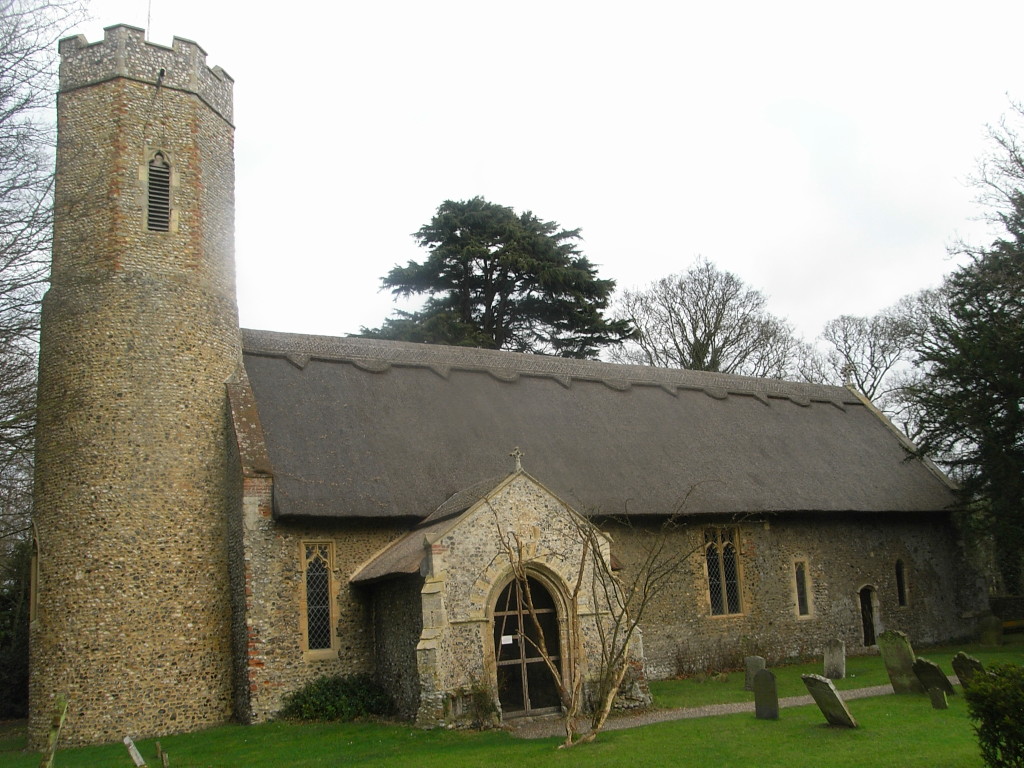
Horsey Church

The massive holes that had been created gradually began to fill with water as the sea levels rose and by the 14th century flooding was taking place on a regular basis and peat extraction was simply no longer possible. Probably the Great Storm of 1287 spelt the end of this way of life for many people in the area. The suffering must have been great. It would have been of no consolation to them that 600 years later a thriving tourist industry would employ many people in the area.

In recent times the North Sea storms and surges of 1936, 1953 and 2013 have caused death and destruction. In 1936 we nearly lost a whole Broad (Horsey Mere) to extensive flooding; in 1953, 100 people died in Norfolk; and in the 3 metre surge of 2013 we only narrowly avoided disaster by a few centimetres. Few human casualties this time, but hundreds of bewildered grey seal pups found themselves stranded on the top of the dunes.


Climate Change will bring us greater frequency of storms combined with sea level rise. There is a real threat to us, our environment, and our economy. Horsey Mere would probably be the first Broad to go, but many others would follow. And whilst Norfolk people are very adaptable, another 600 years of struggle and change is the sort of thing we want to avoid for future generations.  For the love of the Broads, we need action now.


So on the 17th June, I will be coming to London along with other people from my constituency to talk to my  MP, Richard Bacon. In the past he has been very responsive to our local flooding problems in the village where I live and am a Parish Councillor. We need to have a big conversation about this potential flooding issue: bigger than my village, bigger than Norfolk … in fact so big that we can only tackle it through international efforts. Efforts like the United Nations Climate Change Conference, to be held in Paris from 30 November to 11 December 2015, where we need our leaders to achieve a legally binding and universal agreement on climate, from all the nations of the world.

 
Mary Dorrell with another Norfolk WI member at Blue Wave
 

Friday, 29 May 2015

Celebrating the Equal Pay Act 45 Years On

Today, the 29th of May, marks the 45th anniversary of the passage of the Equal Pay Act (1970). Heralded as a watershed moment in the fight for gender equality, the legislation ‘aimed to prevent discrimination as regards terms and conditions of employment between men and women.’ The chief principle behind the Act is that women should receive equal pay for equal work and if a woman finds out that she has been paid less than a male counterpart engaged in similar work she can take her employer to a tribunal with the hope of receiving compensation.

Since its passage the Act has been largely subsumed into the 2010 Equality Act, which amalgamated many of the various anti-discrimination laws that have been passed in the UK over the past 50 years under one act. Despite such robust legislation the fight for equal pay is far from over. The gender pay gap remains stark and is actually in some instances getting worse: last year for every £1 a man earned, a woman only earned 82p. This means that in effect women work almost two months for no pay when compared to men, which is why Equal Pay Day was commemorated on the 4th of November last year. There is still more troubling news: last year the UK fell out of the top 20 most gender equal countries in the world for the first time since the rankings began, hitting a low of 26 in the 2014 Global Gender Gap Report.

The WI has a very long and proud tradition for campaigning for equal pay and gender equity. While it is often noted that the WI passed its first resolution calling for equal pay in 1943, it was actually much earlier that the WI first expressed an avid interest in campaigning on the issue. In 1921 the WI joined the Six Point Group, a body campaigning on a whole host of gender equality issues, from equal pay, to equal guardianship of children, and protecting the rights of widowed mothers and abused children. The Group also petitioned the League of Nations to pass an Equal Rights Treaty. 

Extract of a letter from the Six Point Group outlining their demands (The National Archives)

Additionally, it was also in the 1920s that the WI began its push for better pay for female agricultural workers and achieved a major victory when in 1929 as a direct result of the NFWI’s deputation, the Minister of Agriculture decided to fix overtime wages for women workers. However, it wasn’t until the Second World War that the WI took a national leading role in campaigns for equitable pay and compensation across many sectors. Home and Country reported in the early 1940s that many WIs across the nation had begun debating the issue of equal compensation for men and women injured in air raids. Home and Country reported that many WI members ‘know from personal experience that bombs do not discriminate between men and women, but by all people who believe in justice’ and they didn’t think it was fair that injured women received less compensation than men.

In 1943 a resolution calling for equal pay for equal work was submitted for debate at the WI AGM. In arguing for the resolution a WI member noted that achieving the vote was only the first step in the long march to equality:

‘During the past 25 years many sex injustices have been swept away, but many still remain. There is still inequality of pay in posts open to both sexes; women are not allowed to retain their nationality on marriage, peeresses in their own right may not sit in the House of Lords…These are some of the reforms for which those who believe in the right of the individual to equality are now working.’

When the equal pay resolution was passed, the WI wasted little time getting to work on it. The WI joined the Equal Pay Campaign Committee, which presented the resolution to the various government ministries. The following year there was an immediate result as the Ministry of Agriculture agreed to equal pay for agricultural workers. Subsequently, in 1944 the Prime Minister set up a Royal Commission on Equal Pay for Equal Work. 


Reflecting on the progress of the resolution so far, the WI committed to further campaigning, writing ‘WIs, having ranged themselves on the side demanding equal pay, have a large part to play as protagonists.’ The WI soon after began campaigning for equal pay for teachers and civil servants, despite running up against pretty entrenched opposition from the Government. In 1955 the campaign won two major victories when equal pay for both of those groups was realised.

After the Equal Pay Act was finally passed in 1970 the WI didn’t let up campaigning on the issue. The WI worked hard over the next decade to make sure the Act had teeth, was implemented in a timely manner, and that the public knew about it. As the editor of Home and Country wrote: ‘This passing of the Act is only the beginning. It is only our attitude to things that is going to put flesh and blood on it.’

For instance, the WI knew that the legislation meant nothing without rigorous enforcement, which is why they supported and celebrated attempts by some members of Parliament to pass an Anti-Discrimination Bill in 1972 that supported the principles of the Act and would make it illegal for an employer to discriminate against anyone on the grounds of sex. The WI joined together with other women’s groups to present a united front, but it was WI involvement that leant much credence to the Bill, with the record in Hansard noting ‘The Women’s Institutes…came out very firmly in favour of the principles enshrined in the Bill.’

The WI so strongly believed that the fight wasn’t finished that in 1975, the same year the Equal Pay Act was finally implemented, they passed another resolution pledging to  continue the fight ‘for the principle of equality of opportunities and legal status for men and women.’ Following this resolution the WI lent its support to Factory Act Legislation, which offered safety, health, and welfare protections for women working in factories, but the WI also sought to extend that protection to all workers, female or male! The WI also campaigned for the right of women to work in mines, drive construction plant trucks, and work on the docks. 

Pictured below is Susan Brown in 1979, the first woman trained by the Construction Industry Training Bord as a plant operator. When asked about her new job Susan said: ‘I have always wanted to drive heavy machines. Their power fascinates me and I enjoy controlling it.’


All throughout the 80s and 90s the WI kept on the pressure when it came to issues of gender equality. To only highlight a few instances, in 1983 the WI argued that women should be able to transmit citizenship on equal terms with men to their children abroad and in 1986 they pushed the Government to ratify the United Nations Convention on the Elimination of All Forms of Discrimination Against Women (CEDAW). The 80 years of advocacy for gender equity was crystallized in its 1999 resolution, stating:

This meeting deplores the fact that women’s human rights continue to be violated worldwide and calls upon the governments of  the world to adhere to the commitments made at the Fourth UN Convention on Women in 1995, ‘that women’s rights are an inalienable, integral, and indivisible part of universal human rights’ and to implement policies to this end. 


Monday, 18 May 2015

Launch of the NFWI-Wales Centenary Craft Exhibition

The WI centenary celebrations in Wales kick-started on Anglesey, the birthplace of the first WI in Britain, at the weekend (16 & 17 May) with the launch of the NFWI-Wales Centenary Craft Exhibition.

During the 2 days, over 1000 WI members gathered at the Bulkeley Hotel in Beaumaris, Anglesey to view the 13 magnificent 5ft x 3ft hand-crafted panels designed and created by members in Wales.  Outlining key milestones, achievements and the diverse activities of the WI over its 100 years, the panels bring to life the contribution that the WI has made and the influence it has had on communities and the country.


Each of the 13 federations in Wales had responsibility for depicting a period in the history of the WI and over the last year, WI crafters have been busy designing and creating the panels in collaboration with Mair Stephens, the NFWI-Wales designer. The panels showcase members’ talents at their best and the craft skills were much appreciated by all who visited the exhibition.

3D displays and digital stories capturing the memories, attitudes, feelings and experiences of WI members also formed part of the exhibition.

During the coming months, the exhibition will travelling across the country and will be on display at the Royal Welsh Show in Llanelwed (20-23 July), the National Eisteddfod of Wales in Meifod (1-8 August), the WI Centennial Fair in Harrogate (3-6 September) and the NFWI-Wales Gala Concert and Annual Wales Conference in St David’s Hall (18 & 19 September).


NFWI-Wales acknowledges its thanks to the panel sponsors – NFWI, NFU Cymru, NFU Mutual, FUW, Abakhan Fabrics, Commercial Christmas of Llanelli, the Ashley Family Foundation and North Wales Newspapers.  

Thank you also to members of the Centenary Panel working group for their guidance and support - Ann Jones, Chair of the Federations of Wales; Helen Carey, Adviser and Mair Stephens, Designer.


The 13 craft panels:


1897- 1915
Anglesey Panel

1915-1919
Gwynedd Caernarfon Panel

1920-1929
Clwyd Denbigh Panel

1930-1939
Clwyd Flint Panel

1940-1949
Powys Montgomery Panel

1950-1959
Gwynedd Meirionnydd Panel

1960-1969
Ceredigion Panel

1970-1979
Pembrokeshire Panel

1980-1989
Sir Gâr Carmarthenshire Panel

1990-1999
Glamorgan Panel

2000-2009
Gwent Panel

2010-2015
Powys Brecknock

2015 Onwards
Powys Radnor Panel