Friday, 29 May 2015

Celebrating the Equal Pay Act 45 Years On

Today, the 29th of May, marks the 45th anniversary of the passage of the Equal Pay Act (1970). Heralded as a watershed moment in the fight for gender equality, the legislation ‘aimed to prevent discrimination as regards terms and conditions of employment between men and women.’ The chief principle behind the Act is that women should receive equal pay for equal work and if a woman finds out that she has been paid less than a male counterpart engaged in similar work she can take her employer to a tribunal with the hope of receiving compensation.

Since its passage the Act has been largely subsumed into the 2010 Equality Act, which amalgamated many of the various anti-discrimination laws that have been passed in the UK over the past 50 years under one act. Despite such robust legislation the fight for equal pay is far from over. The gender pay gap remains stark and is actually in some instances getting worse: last year for every £1 a man earned, a woman only earned 82p. This means that in effect women work almost two months for no pay when compared to men, which is why Equal Pay Day was commemorated on the 4th of November last year. There is still more troubling news: last year the UK fell out of the top 20 most gender equal countries in the world for the first time since the rankings began, hitting a low of 26 in the 2014 Global Gender Gap Report.

The WI has a very long and proud tradition for campaigning for equal pay and gender equity. While it is often noted that the WI passed its first resolution calling for equal pay in 1943, it was actually much earlier that the WI first expressed an avid interest in campaigning on the issue. In 1921 the WI joined the Six Point Group, a body campaigning on a whole host of gender equality issues, from equal pay, to equal guardianship of children, and protecting the rights of widowed mothers and abused children. The Group also petitioned the League of Nations to pass an Equal Rights Treaty. 

Extract of a letter from the Six Point Group outlining their demands (The National Archives)

Additionally, it was also in the 1920s that the WI began its push for better pay for female agricultural workers and achieved a major victory when in 1929 as a direct result of the NFWI’s deputation, the Minister of Agriculture decided to fix overtime wages for women workers. However, it wasn’t until the Second World War that the WI took a national leading role in campaigns for equitable pay and compensation across many sectors. Home and Country reported in the early 1940s that many WIs across the nation had begun debating the issue of equal compensation for men and women injured in air raids. Home and Country reported that many WI members ‘know from personal experience that bombs do not discriminate between men and women, but by all people who believe in justice’ and they didn’t think it was fair that injured women received less compensation than men.

In 1943 a resolution calling for equal pay for equal work was submitted for debate at the WI AGM. In arguing for the resolution a WI member noted that achieving the vote was only the first step in the long march to equality:

‘During the past 25 years many sex injustices have been swept away, but many still remain. There is still inequality of pay in posts open to both sexes; women are not allowed to retain their nationality on marriage, peeresses in their own right may not sit in the House of Lords…These are some of the reforms for which those who believe in the right of the individual to equality are now working.’

When the equal pay resolution was passed, the WI wasted little time getting to work on it. The WI joined the Equal Pay Campaign Committee, which presented the resolution to the various government ministries. The following year there was an immediate result as the Ministry of Agriculture agreed to equal pay for agricultural workers. Subsequently, in 1944 the Prime Minister set up a Royal Commission on Equal Pay for Equal Work. 


Reflecting on the progress of the resolution so far, the WI committed to further campaigning, writing ‘WIs, having ranged themselves on the side demanding equal pay, have a large part to play as protagonists.’ The WI soon after began campaigning for equal pay for teachers and civil servants, despite running up against pretty entrenched opposition from the Government. In 1955 the campaign won two major victories when equal pay for both of those groups was realised.

After the Equal Pay Act was finally passed in 1970 the WI didn’t let up campaigning on the issue. The WI worked hard over the next decade to make sure the Act had teeth, was implemented in a timely manner, and that the public knew about it. As the editor of Home and Country wrote: ‘This passing of the Act is only the beginning. It is only our attitude to things that is going to put flesh and blood on it.’

For instance, the WI knew that the legislation meant nothing without rigorous enforcement, which is why they supported and celebrated attempts by some members of Parliament to pass an Anti-Discrimination Bill in 1972 that supported the principles of the Act and would make it illegal for an employer to discriminate against anyone on the grounds of sex. The WI joined together with other women’s groups to present a united front, but it was WI involvement that leant much credence to the Bill, with the record in Hansard noting ‘The Women’s Institutes…came out very firmly in favour of the principles enshrined in the Bill.’

The WI so strongly believed that the fight wasn’t finished that in 1975, the same year the Equal Pay Act was finally implemented, they passed another resolution pledging to  continue the fight ‘for the principle of equality of opportunities and legal status for men and women.’ Following this resolution the WI lent its support to Factory Act Legislation, which offered safety, health, and welfare protections for women working in factories, but the WI also sought to extend that protection to all workers, female or male! The WI also campaigned for the right of women to work in mines, drive construction plant trucks, and work on the docks. 

Pictured below is Susan Brown in 1979, the first woman trained by the Construction Industry Training Bord as a plant operator. When asked about her new job Susan said: ‘I have always wanted to drive heavy machines. Their power fascinates me and I enjoy controlling it.’


All throughout the 80s and 90s the WI kept on the pressure when it came to issues of gender equality. To only highlight a few instances, in 1983 the WI argued that women should be able to transmit citizenship on equal terms with men to their children abroad and in 1986 they pushed the Government to ratify the United Nations Convention on the Elimination of All Forms of Discrimination Against Women (CEDAW). The 80 years of advocacy for gender equity was crystallized in its 1999 resolution, stating:

This meeting deplores the fact that women’s human rights continue to be violated worldwide and calls upon the governments of  the world to adhere to the commitments made at the Fourth UN Convention on Women in 1995, ‘that women’s rights are an inalienable, integral, and indivisible part of universal human rights’ and to implement policies to this end. 


Monday, 18 May 2015

Launch of the NFWI-Wales Centenary Craft Exhibition

The WI centenary celebrations in Wales kick-started on Anglesey, the birthplace of the first WI in Britain, at the weekend (16 & 17 May) with the launch of the NFWI-Wales Centenary Craft Exhibition.

During the 2 days, over 1000 WI members gathered at the Bulkeley Hotel in Beaumaris, Anglesey to view the 13 magnificent 5ft x 3ft hand-crafted panels designed and created by members in Wales.  Outlining key milestones, achievements and the diverse activities of the WI over its 100 years, the panels bring to life the contribution that the WI has made and the influence it has had on communities and the country.


Each of the 13 federations in Wales had responsibility for depicting a period in the history of the WI and over the last year, WI crafters have been busy designing and creating the panels in collaboration with Mair Stephens, the NFWI-Wales designer. The panels showcase members’ talents at their best and the craft skills were much appreciated by all who visited the exhibition.

3D displays and digital stories capturing the memories, attitudes, feelings and experiences of WI members also formed part of the exhibition.

During the coming months, the exhibition will travelling across the country and will be on display at the Royal Welsh Show in Llanelwed (20-23 July), the National Eisteddfod of Wales in Meifod (1-8 August), the WI Centennial Fair in Harrogate (3-6 September) and the NFWI-Wales Gala Concert and Annual Wales Conference in St David’s Hall (18 & 19 September).


NFWI-Wales acknowledges its thanks to the panel sponsors – NFWI, NFU Cymru, NFU Mutual, FUW, Abakhan Fabrics, Commercial Christmas of Llanelli, the Ashley Family Foundation and North Wales Newspapers.  

Thank you also to members of the Centenary Panel working group for their guidance and support - Ann Jones, Chair of the Federations of Wales; Helen Carey, Adviser and Mair Stephens, Designer.


The 13 craft panels:


1897- 1915
Anglesey Panel

1915-1919
Gwynedd Caernarfon Panel

1920-1929
Clwyd Denbigh Panel

1930-1939
Clwyd Flint Panel

1940-1949
Powys Montgomery Panel

1950-1959
Gwynedd Meirionnydd Panel

1960-1969
Ceredigion Panel

1970-1979
Pembrokeshire Panel

1980-1989
Sir Gâr Carmarthenshire Panel

1990-1999
Glamorgan Panel

2000-2009
Gwent Panel

2010-2015
Powys Brecknock

2015 Onwards
Powys Radnor Panel

Thursday, 7 May 2015

Time to Talk Campaign; a ‘Duck Bomb’

Guest blog from Anna Bradley-Dorman, Public Affairs Chairman, Huntingdon & Peterborough Federation

Towards the end of 2014 Sally Dalley (Chairman of Huntingdon & Peterborough Federation) and I were privileged to meet with Ann Rowcliffe whose daughter, Clare, was born with a genetic lung disease and unfortunately, as a matching donor was never found, passed away aged 26. Even with her own time running out, Clare asked her Mum to promise to donate any organs or tissues that she could after her death. As a result, the sight of two young adults has now been restored by receiving her corneas. 
Clare loved being creative and was also crazy about little yellow rubber ducks. On the first anniversary of her death, in memory of Clare, as a random act of kindness Ann left little yellow ducks in public places for people to find and take. This has now, thanks to Clare’s friend Emma, blossomed into a worldwide initiative called ‘The Little Yellow Duck Project’. Each duck has a label attached with a name and details of how to register the duck on a world map and, most importantly, how to register as an organ donor. Ducks have now been registered in over 65 countries and as a result many new donors have been created.
In our centenary year, the members of Huntingdon & Peterborough were encouraged to make a public display to show the difference the combined might of WI members can make to our community. So, to support this year’s resolution ‘Time to Talk’, we invited all our members to either knit, sew, crotchet or decorate one or more Little Yellow Duck for a ‘Duck Bomb’ on Friday 24th and Saturday 25th April 2015.


Ann likes to theme and name her ducks so we decided to call all our ducks Wilma as it begins with the letters WI. A special label was designed (with information about the ‘Time to Talk’ campaign on the reverse) that asked members to indicate who they had told about their wishes regarding organ donation.
Our members did not disappoint. We estimate around 1,500 Little Yellow Ducks (and some not so yellow or little!) were released over Friday 24th and Saturday 25th April. The full sized padding pool we put out at our Annual Federation Day was full to overflowing and we know that, in addition, several WIs were distributing their own ducks locally. Many had duck making evenings where members got together and one WI set themselves the task of knitting 100 ducks for the centenary.


Many local retailers, sports clubs, medical facilities, libraries etc. agreed to take some of our ducks and our thanks goes out to all of them. We were particularly delighted that the Organ Donation Committee of the Peterborough and Stamford Hospitals NHS Foundation Trust wanted to work with us. We turned up on Friday the 24th with our paddling pool of around 200 ducks and Time to Talk leaflets and were greeted by the Chairman of the Hospital, Rob Hughes and Dr Tuba Hussain, the Trust Clinical Lead for Organ Donation who we, of course presented, with their own ducks. Dr Hussain said,
‘I love the cards saying “I have spoken to __ about my wishes”. Really great. So often that is where staff get stuck, to have it written down in black and white is fantastic.’
We were astounded with the response from the general public and employees alike. In fact we ran out of both leaflets and ducks by lunchtime so great was the take-up. It was fantastic to see all the ducks go off to new homes but most importantly we had so many conversations with people about both organ donation and the importance of making their wishes known. We were also joined that morning by Ann Rowcliffe herself, resplendent in bright yellow, Toby Payne (Chair of the Organ Donation Committee) and Teresa Jude (Organ Donation Administrator).

Teresa Jude, Organ Donation Administrator

The Duck Bomb has had significant social and local media coverage and has not only promoted the resolution but the WI as well. One comment about the ducks left on The Little Yellow Duck website said,
"Was lovely to see them and made me smile. Then I realised what the cause was and felt it was a good opportunity to let my family know my wishes. Has started a conversation...saw a couple of little girls hugging theirs whilst out for a walk, thank you for sharing. Will take Wilma to work to keep the conversation going."
Our aim was to get people talking and, even if people choose not to register their ducks or become an organ donor at least they will have had the conversation.
The campaign is called ‘Time to Talk’ – 1500 ducks certainly got people talking!

Prue Leith with one of the ducks

Tuesday, 5 May 2015

The NFWI and Analgesics

International Day of the Midwife is marked today (5 May). This year’s theme is ‘Midwives for a Better Tomorrow,’ yet a look back into the WI archives reveals that WI members have long known that midwifery professionals are at the heart of quality care for women and families.

The NFWI has been campaigning on maternal health issues and improvements in health care from as early as 1925. In 1938 members’ efforts turned to addressing pain relief in labour, when a resolution urging “the new methods of analgesia [to be] made available for all countrywomen in childbirth” was passed.

Midwives, who usually attended poorer, rural women, were often not trained in administering the drugs. Most women could not afford a private obstetrician or were understandably afraid to use them. Pain relief during labour was the preserve of the wealthy, the urban, and the educated - a fact that the WI found unacceptable.

The resolution brought nationwide attention to the issue and was discussed in Parliament, with Fulham MP, Dr. Edith Summerskill proposing an inquiry to investigate how to better train midwives in providing the drugs.

The decades that followed saw the NFWI and its allies successfully build both public and professional understanding about analgesia. Following WWII, the NFWI partnered with the National Birthday Trust Fund and began campaigning for all midwives to be given training in providing analgesics. That campaign was successful and, as of January 1st 1948, new midwifery students began to undergo analgesics training.

After the Analgesia in Childbirth Bill (1949) – backed by the NFWI in an attempt to enshrine into law the right for women to pain-relief during childbirth – failed to pass, the NFWI kept up the momentum with a survey of members on the use of air and gas during labour to find out how to best serve them and empower women to speak up and make choices during childbirth.

With the results revealing that the reasons women did not opt for analgesics were because “some did not find analgesia effective”, some were “ignorant” of the benefits, and others “apprehensive” the NFWI set out to spread the word that if administered properly analgesics were safe and effective. WIs wrote articles, had talks, and hosted tents at County Fairs where they provided practical demonstrations on how to administer and receive the drugs, which proved extremely popular. A special section in the WI tent at the Herefordshire county show in the early 1950s was dedicated to gas and air, with a country midwife on duty demonstrating how the sets worked.  In February 1953 Home and Country magazine reported “This excellent idea brought forward gas and air apparatus to the notice of many people who would not have otherwise heard of it.” Other WIs were encouraged to help midwives have a gas and air set on view in Infant Welfare Centres for mothers to see them, or even to train up local women to help midwives use the machines.

Midwife administering analgesia


The WI campaign for analgesia is just one example of how the WI has worked to support midwives and ensure women are empowered in their healthcare decisions. From the campaign for more midwives (2012), to decrease maternal mortality (1925), for free family planning (1972), and screenings for breast cancer (1975), the WI has always sought to improve women’s health and educate members so they can make informed decisions for themselves and their families. 

To celebrate both our centenary and the International Day of the Midwife (5 May), we have released our report on the maternity experiences of WI members over the last 50 years. Watch some highlights from the report here:


Friday, 17 April 2015

Looking Behind The Labels: Fashion Revolution Day #whomademyclothes

Guest blog from Judith Condor-Vidal, Member of Walton Manor WI and ethical fashion campaigner


On 24th April 2013, 1,133 people were killed and over 2500 were injured when the Rana Plaza factory complex collapsed in Dhaka, Bangladesh. Social and environmental catastrophes are sadly all too common in fashion supply chains. Fashion Revolution Day - on 24th April - says enough is enough. 

I’ll be marking the anniversary by taking part in this year’s day of action with members of Walton Manor WI.  Fashion Revolution Day will bring everyone in the fashion value chain together and help to raise awareness of the true cost of fashion, show the world that change is possible, and celebrate all those involved in creating a more sustainable future.

As consumers, every one of us is part of this chain.

On the second anniversary of the disaster we aim to raise awareness of the true cost of fashion, show the world that change is possible, and celebrate all those involved in creating a more sustainable future for fashion. The theme of this year’s Fashion Revolution Day is ‘Who Made My Clothes’ (and no, this doesn’t just mean which brand....it means who? literally!) Let’s imagine the thread from the garment, to the machinist who sewed it, all the way down to the farmer who grew the cotton.

Fashion Revolution has come up with a simple ways in which you can take part:

BE CURIOUS
Wear an item of clothing inside out —choose an item from your wardrobe and wear it inside out all day — Ask yourself where is it from? —Who made it?

FIND OUT
Ask brands who made my clothes? And try and discover who are the real people throughout the supply chain involved in manufacturing our clothes.

DO SOMETHING
We hope hundreds of thousands of people around the world will take part and raise awareness within the fashion industry and beyond of the need to try and make things better.

Two hashtags are being used this year. Use #FashRev for tweets throughout the year, and on and around 24 April, use the campaign hashtag #whomademyclothes.

On 24 April, please tweet: Today I’m wearing my (shirt/dress/t-shirt etc.) inside out because I want to ask @[brand/retailer] #whomademyclothes.

Tell your friends, family and colleagues about Fashion Revolution Day and get them to wear something inside out.

And why not take a picture of yourself wearing an item of clothing inside out? Share it on Facebook, Twitter or Instagram with #whomademyclothes and write to and tag the brand, asking them the question Who Made My Clothes?  Follow the lead of Dee Sinclair, Oxford City Councillor and former Lord Mayor, taking part in the event in 2014.


With these simple actions we can all join Fashion Revolution Day! At Walton Manor WI members will be getting together at 7pm this 24th April at the city of Oxford’s Town Hall and wearing our clothes inside out for a photo shoot with the Lord Mayor of Oxford. Join us or organise your own get together.

For more information
Check out the Fashion Revolution Day website to discover the stories behind the people who made your clothes or find out what’s happening in your area.

Play the Fashion Revolution Day Quiz to test your knowledge! Whether you’re an eco-fashion boffin or not, we know you’ll find some interesting facts and be challenged to think more about Who Made My Clothes!  For Quiz answers, please email  judith@tradingfordevelopment.co.uk

Thursday, 9 April 2015

The WI Walks by Louise Checkley

Hello Ladies of the WI,

I have been a member of N1 WI in Islington for 4 years, and I am very excited to be part of our upcoming centenary. To help mark 100 years of inspiring women we are walking the Thames Path, and we want you to join us for fun, new friends and a chance to give those walking boots a work out!


Over 184 miles from the river's source in Kemble, Gloucestershire, the Thames Path takes in the ancient city of Oxford and beautiful Berkshire countryside, before passing historic Windsor, Runnymede and Hampton Court then threading through iconic London; Westminster, Tower Bridge and Greenwich, to the finish at the Thames Barrier.


Alongside my friend and walker Anna from Stoke Newington WI we have timed our walk to be in line with the final Centenary Baton handover between Middlesex & Surrey federations. We already have confirmation that several members who live near route will be joining us and we would love for more members to join us for a day, a morning or an afternoon. The itinerary of the walk in May is at the bottom of the post.


At approximately 23 miles per day, it will be tough at times and there will be blisters, but it will be great fun and we are fundraising for our WI centenary. This includes purchasing a bench for our local community in Islington and making donations to our chosen charities: Shelter From The Storm and Refugee Womens Association, local charities in Islington & Hackney.


As we only have a month left until the main event we are putting in the training hours. You are more than welcome to join us on any of the training walks, listed below.

We have been organising these training walks on most weekends since January. The first walk of the year was with Walk London, who organise walks throughout the capital. We walked the 6 miles from Tower Bridge to Greenwich, covering parts of the Thames Path to help us get into the swing of things.


As I live south of the river I have planned walks close to my front door. The Green Chain Walk finishes at the top of my road and the Capital Ring is also close by. By the 12th May I will have completed the whole of the Capital Ring just from training for our main walk, an achievement in itself!  We have also completed a couple of waterway walks; The River Lee and the Regents Canal.


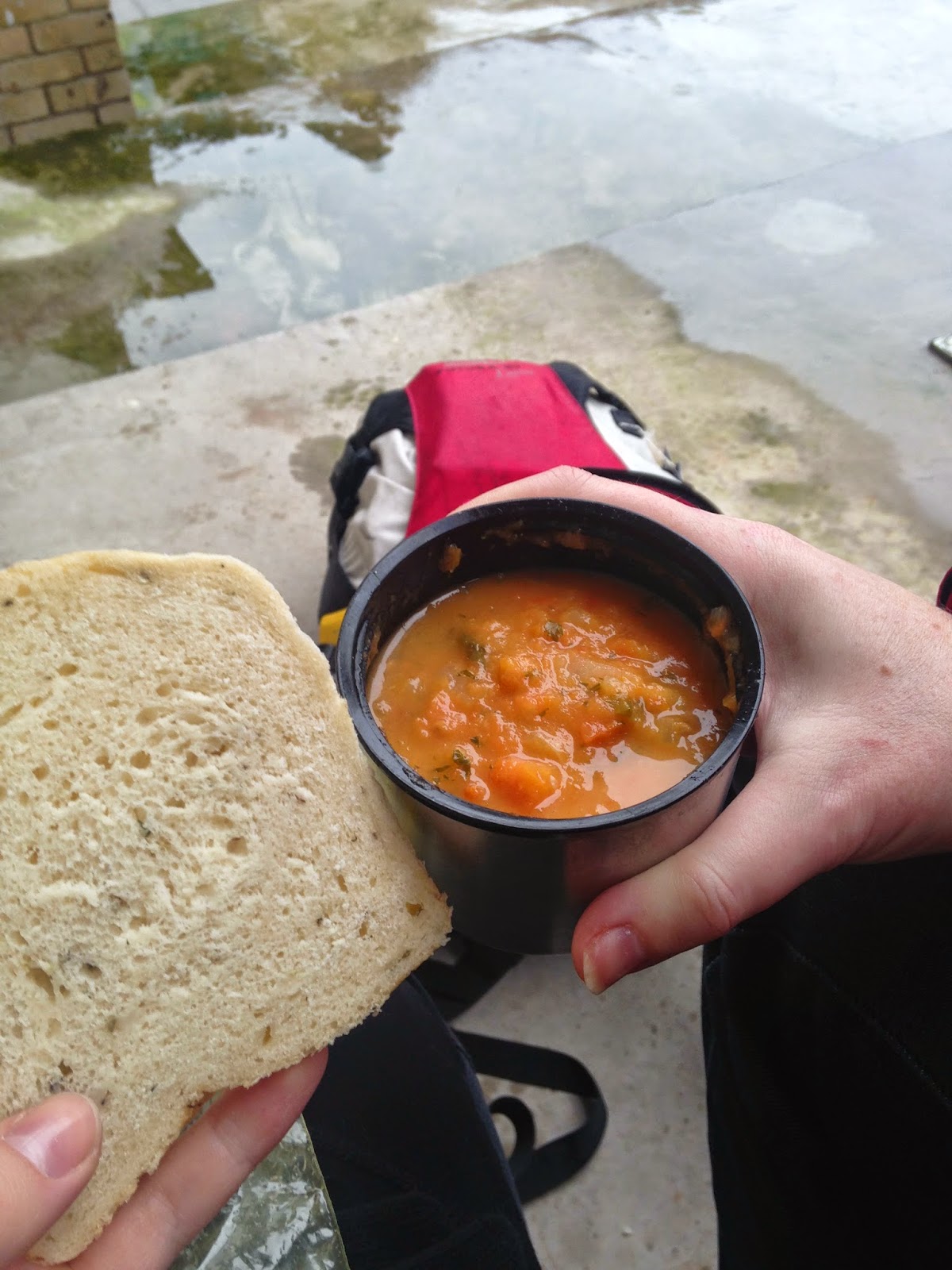
Anna has been feeding us with her homemade soups and baked goods, including bread from her baking course at Denman. I have been providing a much needed source of energy myself...Jelly Babies!


Last weekend North West London WI's walking group invited us on one of their walks - The River Chess, and while the sun didn't have his hat on, we were smiling all the way. It was great to walk with members from other WI's but it fills me with anticipation for the main walk.

If you are close to the Thames in May, please come and join us - whether it’s just to stop for a cup of tea or for the whole day, we would love to meet you. We'll be decked out in hiking gear and our WI sashes, so we won't be hard to spot!

Thank you and see you on The Thames Path!

Louise x


THE ITINERARY:

Tuesday 12th May-
Start: Kemble Train Station 9am
Lunch: Cricklade- The Red Lion 1pm
Finish: Lechlade Ha'Penny Bridge 6pm

Wednesday 13th May-
Start: Lechlade Ha'Penny Bridge 8am
Lunch: The Trout Inn @ Tadpole Bridge 12:30pm
Finish: The Ferryman Inn Bablock Hythe 6pm

Thursday 14th May-
Start: The Ferryman Inn Bablock Hythe 8am
Lunch: A picnic at Port Meadow Oxford 12:30pm
Finish: Cluham Lock 6pm

Friday 15th May-
Start: Cluham Lock 8am
Lunch: The Boat House or a Picnic on the recreation ground Wallingford 12:30pm
Finish: Mapledurham Lock- Purley on Thames 6pm

Saturday 16th May-
Start: Mapledurham Lock- Purley on Thames 8am
Lunch: A picnic in The Meadows @ Henley on Thames 12:30pm
PM: Walk through Runnymede- 800yrs of The Magna Carter
Finish: All Saints Church in Marlow 6pm

Sunday 17th May-
Start: All Saints Church in Marlow 8am
Lunch: A picnic in Alexandra Park Windsor 12:30pm
Finish: The Urban Hanlon Broughton Memorial Egham 6pm

Monday 18th May aka BATON DAY!
Start: The Urban Hanlon Broughton Memorial Egham 8:30am
Pick up the WI Centenary Baton at Staines Bridge 9am
Lunch: 12pm picnic at Walton Bridge were we will meet with Middlesex Federation and other WI members to cheer the baton on from Middlesex to Surrey Federation
Finish: Kew Bridge train station 6pm

Tuesday 19th May-
Start: Kew Bridge train station 8am
Lunch: The Tate Britain Cafe 1pm
Finish: THE THAMES BARRIER!


TRAINING WALKS:

Saturday 11th April-
The Capital Ring
Start: Richmond Train Station 10am
Lunch: Picnic at Manor Court Green Hanwell 1pm
Finish: South Kenton Train Station 5pm
There is a pub at the end of the walk if you wish to have a well deserved drink
Total miles: 16

Saturday 25th April-
The London Marathon Route
Start: Blackheath Train Station 8am
Lunch: Picnic in The Tower of London Park 12:30pm
Finish: Buckingham Palace 5pm
Total miles: 26

Saturday 2nd May-
The Capital Ring
Start: South Kenton Train Station 10am
Lunch: Picnic on Hampstead Heath 1pm
Finish: Stoke Newington Train Station 5pm
There are numerous pubs in Stoke Newington so feel free to stay on for a few well deserved drinks
Total miles: 17

Monday, 9 March 2015

Million Women Rise - Saturday 7th March 2015

Guest blog by Nicky Amos, Somerset Federation


The Million Women Rise March takes place once a year, in London, and aims to raise awareness of all types of violence against women and children. It starts at Duke Street, near Selfridges in Oxford Street and ends two hours later in Trafalgar Square.

I am Chair of Public Affairs for Somerset Federation and have always been very supportive of the WI’s ‘No more Violence Against Women’ campaign.

As I planned to be in London for that weekend anyway, I gathered together a few friends and family, and with NFWI approval and the WI slogan “The WI, making a difference” in mind, I decided to take part.

I had a few reservations.

One was health and safety. Would it be safe?  I need not have worried. The police had closed Oxford Street and there were lots of MWR stewards ensuring the March went according to plan.

Another worry was, who would turn up? I had contacted the organizers before hand and they were a bit vague about the arrangements and the numbers expected.

I need not have worried. Lots of different organizations had come. There were several thousand of us altogether spread out all along the route. It was a very impressive sight. The sun shone, people chatted and the atmosphere was very convivial.

We were all given chant sheets and the lovely lady in this photo did a very good job of getting us all responding. Lots of people had drums and whistles. We made a great deal of noise.


I’ll be honest; I’m not a very extrovert person. Chanting in Oxford Street in front of many thousands of tourists and a few TV crews is not my normal cup of tea. But buoyed-up by the atmosphere, our group soon joined in enthusiastically.


Did we do any good? Did we raise awareness of the issue?

Frankly, before we set out I was sceptical. But people were standing three deep all along Oxford Street and Greek Street watching us pass. Many were filming us on their cameras. Lots clapped. The organisers passed out postcards telling by-standers about the organizations Million Women Rise supported.

Some tourists looked bemused. One told me marching was illegal in his country. Lots of people stopped to talk.

After stopping traffic in Shaftesbury Avenue, Haymarket and Piccadilly Circus we ended in Trafalgar Square, for a very welcome cup of tea.


Would I recommend your WI took part next year?

A resounding yes. I have never been on a march before. What an experience! My party all loved the entire afternoon. I will remember it for ever and I genuinely think we did make a difference.