Guest post by Ed Wallis, Head of Editorial at the Fabian Society.
This autumn, politicians and diplomats will meet in New York to roll up their sleeves and try to come up with solutions to the world’s greatest collective challenge: how to catalyse action on climate change. Whether anyone else will take much notice is another matter entirely. And it’s pretty understandable why.
According to new Fabian Society research, conducted with the WI, RSPB, Woodland Trust and Groundwork, people struggle to engage with large scale environmental issues. Instead they feel a much greater attachment to their local environments.
When people think of the environment, they tend to think of the place they live and the people they live there with. In a series of in-depth focus groups we conducted, climate change was hardly mentioned at all, even when participants were prompted to think about global environmental issues. And in an opinion poll carried out by YouGov to support the work, over twice as many people regarded anti-social behaviour as their biggest environmental concern than climate change.
This poses a huge challenge to the environmental movement, most of whose energies have traditionally been focused on lobbying for legislative change in Westminster or Brussels. This approach hasn’t been without its successes but the environment has slipped off the political agenda in recent years and feels increasingly remote from most people’s lives, particularly as they struggle with ongoing economic hardship.
In order to reconnect, we need to start from what people really value. As the huge public opposition to the coalition government’s botched attempt to sell-off the nation’s forests showed, people care deeply about their local areas and wish to see the environments they have grown up in conserved. What’s more, many would be willing to get involved in ‘community action’ to help improve their local environment.
So the challenge for environmentalists in Britain should be spend less time in New York or Paris and more time in the UK’s towns and villages helping to restore a sense of community about the local environment.
To do this, a broad set of barriers must be overcome. We must ensure there are enough well-paid jobs and affordable housing to allow people to afford to live in the places they grew up in. We need to protect, and extend where possible, the amount of free open spaces like parks and woodland where people can rub shoulders with one another.
And we need to help to change the balance in people’s lives away from work towards being more centred on strong community life. Our polling revealed that over 68 per cent of people felt that community spirit had declined over lifetime, rising to 81 per cent amongst the over 60s. When asked why this might be the case, the answer was clear: people are too busy and working too hard.
One of the key proposals we make, therefore, is a new ‘Community Day’ bank holiday, to provide a focal point for campaigners to highlight local environmental projects. Local residents would be encouraged to take part in activities like litter picks, community events and street parties.
A new bank holiday would only be a start. Something fundamental needs to change for people up and down the country to feel ownership of their local, and ultimately the global, environment. One thing is for sure: if environmentalists only keep their eyes on New York, Paris or Copenhagen, environmental politics is certain to become more distant than ever before.
This article also appears in the July/August Edition of WI Life
Monday, 30 June 2014

Friday, 20 June 2014
Making a buzz about bees
There’s barely a week that goes by when bees aren’t featured in the papers, on the TV or in parliamentary proceedings. This week was no exception, with one key difference; Marylyn Haines Evans, Chair of the NFWI Public Affairs Committee was up in front of the House of Commons Environmental Audit Committee, giving evidence on their future survival.
 The inquiry presented an opportunity for the 16 MPs who sit on the Environmental Audit Committee to question individuals from across the scientific, charitable, business and farming community about the strengths and weaknesses of the draft National Pollinator Strategy (the government’s ‘Bee Action Plan’), investigate how concerns are addressed and aspirations are met, and feed back to government on the issue.
Marylyn gave evidence alongside the National Farmers Union, Friends of the Earth, and civil servants from the Department for Environment, Food and Rural Affairs (Defra). Whilst welcoming the strategy and Defra’s leadership developing it, Marylyn outlined the NFWI’s unease that the strategy was too reliant on voluntary measures, and fell short on issues such as planning, monitoring and insecticide use. Defra will be reflecting on the Committee’s findings before the final strategy is published this autumn, and we hope that they give these the due consideration that’s needed.
 Over the last few months the NFWI has received thousands of postcards from WI members telling Lord de Mauley, the Minister with responsibility for pollinators, just why bees are important to them. Thanks to the five thousand WI members who have written to us, following the Environmental Audit Committee, Marylyn, alongside former Vice Chair of Public Affairs Committee, Sybil Graham, was invited to meet with the Minister to hand-over the postcards, and crucially, share the NFWI’s concerns about the National Pollinator Strategy directly with the Minister.
 The Minister was open to our concerns, and was keen to explore how Defra and the WI can work together to ensure our pollinator populations revive and thrive. The NFWI will of course work with Defra in order to protect our bees and pollinators, but ultimately we believe that there is a huge role for government to implement policies that go above and beyond existing measures if they are to ensure the strategy is fit for purpose and the long-term. WI members have made their views on bee decline explicitly clear, but we are still not convinced that the government’s strategy is as strong as it can be. We will continue to make the case for a strong Bee Action Plan. The NPS provides a unique opportunity to address the multiple challenges our precious pollinators face, let’s not let them down.

Marylyn gave evidence alongside the National Farmers Union, Friends of the Earth, and civil servants from the Department for Environment, Food and Rural Affairs (Defra). Whilst welcoming the strategy and Defra’s leadership developing it, Marylyn outlined the NFWI’s unease that the strategy was too reliant on voluntary measures, and fell short on issues such as planning, monitoring and insecticide use. Defra will be reflecting on the Committee’s findings before the final strategy is published this autumn, and we hope that they give these the due consideration that’s needed.


Tuesday, 10 June 2014
Time to Talk

The journey from the WI’s HQ in London to Leeds for our Annual Meeting took around 2 hours from King’s Cross. But the journey for our Public Affairs team has actually taken a lot longer…
Back on 16 September 2013, 51 ideas for a new campaign had been submitted our Public Affairs team by WI members. These ideas, called resolutions, were on all manner of topics from state pensions to FGM and the regulation of funeral directors. From that point onwards, each idea was subject to a rigorous shortlisting process and the successful ones were put to members for their votes. By the time we got to the First Direct Arena on 7 June 2014, one idea was left standing. It was up to WI members to hear the arguments one last time and decide whether the WI should throw its weight behind this campaign.
And they did: the resolution passed with a 98% majority. The newest mandate in the WI’s 99-hear history reads:
The NFWI notes that three people die every day whilst waiting for an organ transplant. We call on every member of the WI to make their wishes regarding organ donation known, and to encourage their families and friends, and members of their local communities to do likewise.
Laureen Walker from Standon and Cotes WI proposed the idea, which was then seconded by Barbara Hidson of Codsall Wood WI. Sally Johnson, Director at NHS Blood and Transplant spoke for the resolution, while Georgia Testa, Lecturer in medical ethics at Leeds University, set out points for the opposition. Their quotes will give you a flavour of the debate:
“The major barrier to getting consent from families for transplants is that they often have no idea of the wishes of their relative…Statistics show that when families know that their loved ones want to donate their consent rate is 88%. When they don’t know it is only 46%.” Laureen Walker
“Will more open discussion translate the approval rate into numbers actually on the Organ Donation Register? There will still be people who just don’t get around to it, even if there is a climate in which family and friends discuss donation more openly and frequently.” Georgia Testa
“Letting families know what you've decided makes it much easier for them to support your decision to be a donor. The WI is renowned for achieving results. This resolution is down to you.”Barbara Hidson
“Every day, some one in this country who could be a donor dies, and their relatives, in the midst of grief, shock and distress, are asked to allow their loved one's organs to be used to save the life of someone they don't know. Imagine it was your relative: what would you say? If you hadn't talked about organ donation as a family, then it's quite likely you'd say no. You might think it was the safer option. You might come to regret that decision later. It would be so much easier if you knew what your relative wanted: if they wanted to be a donor then you could take comfort from that decision and be proud of them.
“We hope everyone in the UK will be proud to donate their organs, when and if they can. But we know this won't happen without some inspirational leadership. We are asking you to provide this leadership: to talk to your families, your friends and your communities so that no family is left to guess what their loved one wanted.” Sally Johnson
Many WI members spoke of their own donation stories, sharing experiences of being recipients of kidneys and corneas, or being a member of a family who was asked about donating the organs of a loved one. Others mentioned living wills and old donation wallet cards as ways to formalise family consent and get families talking. It was a thought-provoking and emotional debate.
So what happens now?
The NFWI Public Affairs team will begin working on a campaign based on the mandate so watch this space for updates on Time to Talk about Organ Donation.
The best thing about the WI resolutions process? Once we’ve got a mandate, we’ve got it forever. So in that way, the journey for a resolution never ends.
Friday, 23 May 2014
Memory Matters Day: DFWI Making a Difference
Guest blog by Heather Penwarden, President of Awliscombe WI and Vice- Chairman of DFWI’s International and Public Affairs Committee, as well as an Alzheimer’s Society Dementia Champion
.jpg)
On Friday 16th May, as part of National Dementia Awareness Week, Devon Federation of WI’s held a “Memory Matters” day in Exeter with Angela Rippon as the key note speaker. The event attracted 150 WI members representing 50 WIs from around the county.
.jpg)
I have wanted to do something like this for a while and I am absolutely delighted with the response from our members. With one in three of us likely to know someone who has dementia this is an issue that our society cannot afford to ignore. Raising the levels of awareness of what it is like to live with dementia is key to changing negative attitudes towards the disease and to inspiring people to act positively to take action and make a difference.
Devon is predominately a rural community where social isolation can be a big problem particularly if you are living with dementia. With 240 Institutes and over 7000 members DFWI is right in the heart of nearly every village in the county. Who is in a better place to spread the word about dementia awareness? If all 7000 members take just once action after today what an amazing difference that will make.
.jpg)
The day started with Dr Stephen Pearson, Consultant Psychiatrist and South West Peninsula Research, explaining about the different sorts of dementia, followed by presentations from people who are already making a difference to the lives of those living with dementia in Devon.
David Light cared for his wife throughout the progression of her dementia, and from his own experiences of feeling uninformed and isolated as a carer he has gone on to take the lead in setting up over 40 memory cafes in Devon. Rachel Johnstone talked about the valuable work she is doing in linking Sidmouth Memory café and students at the local community college; and Norman McNamara spoke of his experience living with Lewy Body dementia and of his amazing work with the Torbay Dementia Action Alliance.
.jpg)
Angela Rippon took the floor in the afternoon, and spoke with great passion of her work as co-chair of the Prime Minister’s Dementia friendly Group and Ambassador for the Alzheimer’s Society. Angela then led a lively and enthusiastic debate on “what members of the DFWI can do to make a difference to the lives of people living with dementia.”
Members pledged to do the following:
Learn a bit more about what it is like to live with dementia
Become an Alzheimer’s Society Dementia Friend
Seek out a Dementia Friends Awareness Session
Invite a Dementia Champion to come and lead a session at our WI
.jpg)
Volunteer at our local Memory Café
WI’s to adopt a Memory Café and offer support – time, skills and fundraising
If there is no local Memory Café set one up perhaps by joining forces with your local Rotary Club
Offer to volunteer at local hospital or care home
Do as you would be done by – treat everyone with equal respect
.jpg)
See the person and not the dementia
Make up your own memory book and memory box
Help someone else make a memory book and memory box
Make digital recording of your memories, perhaps as a joint project with your grandchildren
.jpg)
Musical memory lasts the longest. Load a personal play list of your favourite music onto an iPod, help someone living with dementia do the same
Make a fidget quilt
Hold a Dementia awareness coffee morning or vintage tea party
Say someone is “Living with dementia” not “Suffering from dementia”
.jpg)
If you are not already a Dementia Friend, and would like to learn more about how you and your WI can make a difference in your community, please see the following link:
https://www.dementiafriends.org.uk/
.jpg)
On Friday 16th May, as part of National Dementia Awareness Week, Devon Federation of WI’s held a “Memory Matters” day in Exeter with Angela Rippon as the key note speaker. The event attracted 150 WI members representing 50 WIs from around the county.
.jpg)
I have wanted to do something like this for a while and I am absolutely delighted with the response from our members. With one in three of us likely to know someone who has dementia this is an issue that our society cannot afford to ignore. Raising the levels of awareness of what it is like to live with dementia is key to changing negative attitudes towards the disease and to inspiring people to act positively to take action and make a difference.
Devon is predominately a rural community where social isolation can be a big problem particularly if you are living with dementia. With 240 Institutes and over 7000 members DFWI is right in the heart of nearly every village in the county. Who is in a better place to spread the word about dementia awareness? If all 7000 members take just once action after today what an amazing difference that will make.
.jpg)
The day started with Dr Stephen Pearson, Consultant Psychiatrist and South West Peninsula Research, explaining about the different sorts of dementia, followed by presentations from people who are already making a difference to the lives of those living with dementia in Devon.
David Light cared for his wife throughout the progression of her dementia, and from his own experiences of feeling uninformed and isolated as a carer he has gone on to take the lead in setting up over 40 memory cafes in Devon. Rachel Johnstone talked about the valuable work she is doing in linking Sidmouth Memory café and students at the local community college; and Norman McNamara spoke of his experience living with Lewy Body dementia and of his amazing work with the Torbay Dementia Action Alliance.
.jpg)
Angela Rippon took the floor in the afternoon, and spoke with great passion of her work as co-chair of the Prime Minister’s Dementia friendly Group and Ambassador for the Alzheimer’s Society. Angela then led a lively and enthusiastic debate on “what members of the DFWI can do to make a difference to the lives of people living with dementia.”
Members pledged to do the following:
Learn a bit more about what it is like to live with dementia
Become an Alzheimer’s Society Dementia Friend
Seek out a Dementia Friends Awareness Session
Invite a Dementia Champion to come and lead a session at our WI
.jpg)
Volunteer at our local Memory Café
WI’s to adopt a Memory Café and offer support – time, skills and fundraising
If there is no local Memory Café set one up perhaps by joining forces with your local Rotary Club
Offer to volunteer at local hospital or care home
Do as you would be done by – treat everyone with equal respect
.jpg)
See the person and not the dementia
Make up your own memory book and memory box
Help someone else make a memory book and memory box
Make digital recording of your memories, perhaps as a joint project with your grandchildren
.jpg)
Musical memory lasts the longest. Load a personal play list of your favourite music onto an iPod, help someone living with dementia do the same
Make a fidget quilt
Hold a Dementia awareness coffee morning or vintage tea party
Say someone is “Living with dementia” not “Suffering from dementia”
.jpg)
If you are not already a Dementia Friend, and would like to learn more about how you and your WI can make a difference in your community, please see the following link:
https://www.dementiafriends.org.uk/
Friday, 16 May 2014
Dementia Friends: Huntingdon & Peterborough WI members take up the challenge
Today's guest post is from Anna Bradley-Dorman, a WI member from Huntingdon and Peterborough Federation
In September I was lucky enough to attend the NFWIs ‘Caring Challenge Conference’ with a fellow trustee, Phyllis Brookes, at which we heard about the challenge of dealing with an increasingly aging population and the growing numbers of people living with dementia. I don’t know anyone who doesn’t know someone who is affected by dementia. We often hear about the devastating effects of dementia but forget that these people are part of our community and it is up to all of us to ensure that they can continue to be a part of it.
 My personal association with dementia started nearly forty years ago when my beloved grandma turned into a bad tempered, violent woman. Back then no-one could explain it to me. I just thought it was what happened when you got old – but it isn’t. Not all old people are going to get dementia and not all people who have dementia are old. This is just one of the many misconceptions surrounding this disease that needs to be rectified. Dementia needs to be talked about, not swept under the carpet. We need to become a Dementia Friendly Society – this includes individuals, organisations and government. Individuals can become Dementia Friends, organisations can become Dementia Friendly and areas can become Dementia Friendly Communities.
What is a ‘Dementia Friend’ I hear you say? Back in March 2012 the Prime Minister set out his challenge on dementia and commitment to deliver improvements in care and research by 2015. The National Federation of Women’s Institutes (NFWI) signed up to be part of the Prime Minister's challenge and joined a Dementia Friendly Communities Group which has been tasked with finding out what can be done to make our communities more dementia friendly. To help build dementia friendly communities, the NFWI is backing the Dementia Friends initiative, helping to create a network of a million dementia friends by 2015. The intention is to build public awareness of dementia and the small things that people can do that can make a difference to people living with dementia, providing a helping hand to enable them to go about their daily lives and feel included in the local community.
The other main focus of the conference was the effect our aging population is having on carers. More and more of us will have to care for a loved one in the future. Many carers are left to cope with little support. Quite often the focus is, naturally, on the person living with dementia but we forget that the carer needs support too. Carers need to be provided with necessary help and support early on – financial, social and medical. They are often faced with trying to navigate through the baffling, uncoordinated realm of social and health care systems with little or no help. They frequently feel that their opinions are not valid when they are the person who knows their relative the best. I have witnessed first-hand the difficulties carers face as I watched both my mother-in-law and father care for spouses with dementia.
So we went back to our federation armed with statistics, personal stories and information. It was obvious we needed to do something but what? We realised that we could talk about it until we were blue in the face but we really wanted our response to be practical. We could blind our members with science and facts but apart from increasing awareness what would it achieve? Eventually we came up with a plan. I am fortunate to work as an administrator for a local community development charity that works with many different organisations. Three organisations came to mind and were invited to come along to our Federation Centre on the 10 May 2014. At this session, in direct response to the ‘Caring Challenge’, the audience heard from speakers, each of whom were tackling this issue head-on.
 James Nicol is a Dementia Champion who has received training and volunteered to recruit people to become Dementia Friends. James is passionate about this project and gave an interactive presentation after which several members signed up to become a ‘Dementia Friend’. He spoke about how Dementia Friends is giving people an understanding of dementia difference to people living with dementia – from helping someone find the right bus to spreading the word about the disease to ensure those living locally are supported and can live well with dementia.
Linda Collumbell from Carers Trust Cambridgeshire described an innovative pilot scheme called ‘The Better Health Network’ which has been designed to improve the support provided to elderly people and those with long term conditions, by co-ordinating the services being delivered by charities and voluntary organisations. The scheme offers a one-off assessment which is then used to identify the relevant support. Key to the pilot is the close coordination of Social Services and NHS services with those provided by charities and voluntary groups.
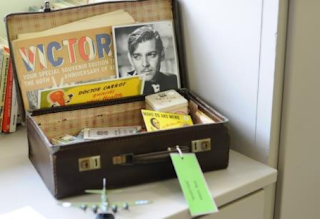 Lauren Stonebridge from The Great Fen and Barbara Cobb from Ramsey Rural Museum spoke about a joint project to deliver reminiscence sessions using memory boxes. Reminiscing can be a useful tool for people with memory problems to help improve their self-esteem, personal identity and increase their socialisation. The memory boxes cover many different life topics and contain a variety of objects which are used to trigger memories and generate discussion.
At the end of the morning the audience went home with practical things they could do, a greater understanding and useful information. At the moment we can’t prevent this disease but there are ways of making life a little easier for those living with dementia and the people who care for them.
Find out how to become a Dementia Friend here
In September I was lucky enough to attend the NFWIs ‘Caring Challenge Conference’ with a fellow trustee, Phyllis Brookes, at which we heard about the challenge of dealing with an increasingly aging population and the growing numbers of people living with dementia. I don’t know anyone who doesn’t know someone who is affected by dementia. We often hear about the devastating effects of dementia but forget that these people are part of our community and it is up to all of us to ensure that they can continue to be a part of it.

What is a ‘Dementia Friend’ I hear you say? Back in March 2012 the Prime Minister set out his challenge on dementia and commitment to deliver improvements in care and research by 2015. The National Federation of Women’s Institutes (NFWI) signed up to be part of the Prime Minister's challenge and joined a Dementia Friendly Communities Group which has been tasked with finding out what can be done to make our communities more dementia friendly. To help build dementia friendly communities, the NFWI is backing the Dementia Friends initiative, helping to create a network of a million dementia friends by 2015. The intention is to build public awareness of dementia and the small things that people can do that can make a difference to people living with dementia, providing a helping hand to enable them to go about their daily lives and feel included in the local community.
The other main focus of the conference was the effect our aging population is having on carers. More and more of us will have to care for a loved one in the future. Many carers are left to cope with little support. Quite often the focus is, naturally, on the person living with dementia but we forget that the carer needs support too. Carers need to be provided with necessary help and support early on – financial, social and medical. They are often faced with trying to navigate through the baffling, uncoordinated realm of social and health care systems with little or no help. They frequently feel that their opinions are not valid when they are the person who knows their relative the best. I have witnessed first-hand the difficulties carers face as I watched both my mother-in-law and father care for spouses with dementia.
So we went back to our federation armed with statistics, personal stories and information. It was obvious we needed to do something but what? We realised that we could talk about it until we were blue in the face but we really wanted our response to be practical. We could blind our members with science and facts but apart from increasing awareness what would it achieve? Eventually we came up with a plan. I am fortunate to work as an administrator for a local community development charity that works with many different organisations. Three organisations came to mind and were invited to come along to our Federation Centre on the 10 May 2014. At this session, in direct response to the ‘Caring Challenge’, the audience heard from speakers, each of whom were tackling this issue head-on.

Linda Collumbell from Carers Trust Cambridgeshire described an innovative pilot scheme called ‘The Better Health Network’ which has been designed to improve the support provided to elderly people and those with long term conditions, by co-ordinating the services being delivered by charities and voluntary organisations. The scheme offers a one-off assessment which is then used to identify the relevant support. Key to the pilot is the close coordination of Social Services and NHS services with those provided by charities and voluntary groups.

At the end of the morning the audience went home with practical things they could do, a greater understanding and useful information. At the moment we can’t prevent this disease but there are ways of making life a little easier for those living with dementia and the people who care for them.
Find out how to become a Dementia Friend here
Monday, 28 April 2014
A Bee in My Bonnet!

The latest bee blog from Martha Kearney. Follow the seasons and gain a unique insight into the world of beekeeping with Martha Kearney, BBC journalist and beekeeping enthusiast. Martha has raised awareness of the honeybee's plight, notably through the BBC 4 series “The Wonder of Bees”.
I was asked to give a speech recently in my new role as President of the Classical Association and decided to pick the theme of beekeeping in antiquity with the title Mellis Caelestia Dona, the heavenly gift of honey. That comes from the most famous bee poem of all time - Virgil's Fourth Georgic. As well as being beautiful verse, this also contains remarkably good beekeeping advice including the best plants to have nearby, to use smoke to calm the bees and the need for a source of water. He does get a bit nutty about producing bees from the carcass of a dead ox which was known as Bugonia in ancient times. If you've ever looked at a golden syrup tin you'll get the idea. They used the image of a dead lion from a Biblical story. Nonsense of course as honey bees hate carrion.



You can see us both in action in episode 3 of The Wonder of Bees on BBC4 at 8pm on Monday night. The earlier ones are on the iplayer. This time we are extracting honey in a very much Don't Try This at Home way. I also meet a natural beekeeper who lets her bees swarm and doesn't use chemicals to treat for varroa. You can find more information here.
But many beekeepers will disagree with that approach. There is extensive information on the British Beekeepers association site here.
They also run a scheme called Adopt a Beehive for people who want to support bees with keeping them themselves.
If you have any thoughts on how the government can help honeybees and other pollinating insects, then there is still time to contribute to the consultation on the National Pollinator Strategy which ends on May 2nd. For more information on how the NFWI and WI members are getting involved in the campaign, and for details on how you can help, please visit the website.
If you have any thoughts on my blog or bees, do get in touch via Twitter @MarthaKearney
To read more from Martha, please visit her bee blog on the NFWI website.
Tuesday, 15 April 2014
A Bee in My Bonnet!
The latest bee blog from Martha Kearney. Follow the seasons and gain a unique insight into the world of beekeeping with Martha Kearney, BBC journalist and beekeeping enthusiast. Martha has raised awareness of the honeybee's plight, notably through the BBC 4 series “The Wonder of Bees”.
My hives have now truly become Bee List Celebrities. This weekend the society magazine Tatler came to photograph them for their feature called Pet of the Month.

The reason Tatler was interested is because my TV series The Wonder of Bees begins on Monday April 14th, the first of four about the ups and downs of beekeeping in the course of a year. I thought we were doomed from the outset as it was so cold last year.

See video clip here
I also became much better at spotting the queen but I still find it very difficult to see eggs which are like tiny white threads in the hexagonal cells. John also showed me a way of controlling swarms but I'm not sure I am ready to follow suit. It involves clipping the queen's wings.
See video clip here
So did we succeed against all the problems of the weather and produce a jar of wildflower honey? Stay tuned......
You can find more information on the Facebook page The Wonder of Bees or on Twitter @wonderofbees
For related newspaper coverage see:
The Independent; To bee or not to bee
The Telegraph; Archbishop of Canterbury - I talked to the bees
The Financial Times; Martha Kearney's bee list celebrities
Martha Kearney's full Bee Blog is available to view on the NFWI website here.
Subscribe to:
Posts (Atom)